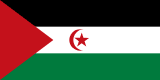
Western Sahara
Western Sahara
Population
610,813 (2026)
Average Monthly Net Salary (USD)
310
Average Mortgage Rate
8.50%
Annual GDP (USD)
N/A
National Debt (USD)
N/A
Unemployment Rate
N/A
Armed Forces (active & reserve)
N/A
Military Expenditure (% GDP)
N/A
Fertility Rate
N/A
Life Expectancy at birth
N/A
Population Growth
N/A
Net Migration
N/A
Notable Facts
Western Sahara is a territory located on the northwest coast of Africa, bordered by Morocco to the north, Algeria to the northeast, and Mauritania to the east and south. Geographically, the region is divided into two primary zones: the northern Saguia el-Hamra and the southern Río de Oro. The landscape is dominated by the vast Sahara Desert, consisting primarily of low, flat desert plains that rise to small mountains in the south and northeast. The Atlantic coastline stretches for approximately 1,110 kilometers, providing strategic access to some of the world’s richest fishing grounds. While the terrain is largely arid and inhospitable to traditional large-scale agriculture, it possesses significant mineral wealth, particularly in the form of phosphate deposits and iron ore, which are central to the region's economic and geopolitical importance.
The political status of Western Sahara remains one of the most complex and long-standing unresolved issues in modern international relations. Following the withdrawal of Spain in 1976, the territory was claimed by both Morocco and the Polisario Front, an indigenous liberation movement that proclaimed the Sahrawi Arab Democratic Republic (SADR). Currently, approximately 80% of the territory is administered by Morocco, while the remaining 20% - a landlocked strip primarily in the east - is controlled by the Polisario Front. A massive defensive sand structure known as the "Berm," which is roughly 2,700 kilometers long and heavily fortified with landmines, separates the two areas. The United Nations considers Western Sahara a non-self-governing territory and maintains a peacekeeping mission, MINURSO, to monitor the ceasefire and seek a permanent political solution.
The population of Western Sahara is primarily composed of the Sahrawi people, an ethnic group of mixed Arab and Berber descent. The Sahrawis traditionally lead a nomadic or semi-nomadic lifestyle, well-adapted to the harsh conditions of the desert. Their primary language is Hassaniya Arabic, a distinct dialect also spoken in Mauritania, though Moroccan Arabic, Spanish, and French are also used in various administrative and social contexts. The majority of the population is Sunni Muslim, following the Maliki school of jurisprudence. Religious practices often incorporate traditional Saharan elements suited to a nomadic existence, such as performing prayers in open desert spaces rather than permanent mosques. Due to the ongoing conflict, a significant portion of the Sahrawi population lives in refugee camps near Tindouf, Algeria, which functions as the administrative headquarters for the SADR.