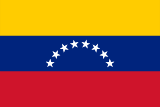
Venezuela
Venezuela
Population
28,516,896 (2025)
Average Monthly Net Salary (USD)
210
Average Mortgage Rate
18.50%
Annual GDP (USD)
99,661,244,156 (2025)
National Debt (USD)
161,240,000,000 (2025)
Unemployment Rate
5.31% (2025)
Armed Forces (active & reserve)
1,438,500
Military Expenditure (% GDP)
0.50% (2023)
Fertility Rate
2.08 (2024)
Life Expectancy at birth
72.7 years (2024)
Population Growth
0.39% (2025)
Net Migration
-100,467 (2025)
Notable Facts
The Bolivarian Republic of Venezuela is a country located on the northern coast of South America, bordered by Colombia to the west, Brazil to the south, and Guyana to the east. Its geography is remarkably diverse, featuring the Andes Mountains in the northwest, the vast central plains known as the Llanos, and the ancient Guiana Highlands in the southeast. The country possesses a coastline of approximately 2,800 kilometers along the Caribbean Sea and the Atlantic Ocean. Venezuela’s territory also includes more than 300 islands, islets, and far-reaching federal dependencies. Historically, its strategic location has made it a gateway between the Caribbean basin and the South American continent, serving as a major hub for maritime trade routes.
The political history of Venezuela was fundamentally shaped by its independence from Spain, officially declared on July 5, 1811. It was a leading force in the liberation of South America under the leadership of Simón Bolívar, often referred to as "El Libertador." Following a period as part of Gran Colombia - a short-lived republic that included present-day Colombia, Ecuador, and Panama - Venezuela became a fully sovereign nation in 1830. For much of the 20th century, the country transitioned through various military dictatorships and periods of democratic governance. The modern state is a federal presidential republic, though the political landscape remains highly centralized and has undergone significant structural changes over the last three decades.
Venezuela is home to the world’s largest proven oil reserves, estimated to exceed 300 billion barrels. The petroleum sector has dominated the national economy since the early 20th century, typically accounting for over 90% of export earnings and a substantial portion of the federal budget. The state-owned company, Petróleos de Venezuela, S.A. (PDVSA), manages the exploration, production, and refining of these resources. While the economy is heavily "rentier" in nature - meaning it relies on the income from a single natural resource - the country also possesses significant deposits of natural gas, gold, iron ore, bauxite, and diamonds. These resources are primarily concentrated in the Orinoco Mining Arc and the eastern regions of the country.