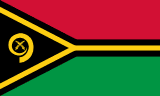
Vanuatu
Vanuatu
Population
335,169 (2025)
Average Monthly Net Salary (USD)
640
Average Mortgage Rate
9.50%
Annual GDP (USD)
1,353,658,841 (2025)
National Debt (USD)
412,000,000 (2025)
Unemployment Rate
5.07% (2025)
Armed Forces (active & reserve)
0
Military Expenditure (% GDP)
N/A
Fertility Rate
3.57 (2024)
Life Expectancy at birth
71.7 years (2024)
Population Growth
2.23% (2025)
Net Migration
-52 (2025)
Notable Facts
The Republic of Vanuatu is a Y-shaped archipelago located in the South Pacific Ocean, approximately three-quarters of the way from Hawaii to Australia. It consists of roughly 80 islands, of which about 65 are inhabited. The islands are primarily of volcanic origin, characterized by steep mountains and narrow coastal plains. Situated on the Pacific "Ring of Fire," the country experiences frequent volcanic and seismic activity. This geological positioning has created a landscape dominated by rugged terrain and high peaks, with the highest point being Mount Tabwemasana on the island of Espiritu Santo. The archipelago is divided into six provinces: Malampa, Penama, Sanma, Shefa, Tafea, and Torba.
The demographic profile of Vanuatu is characterized by an overwhelming majority of Melanesian descent, known as Ni-Vanuatu. They make up approximately 98% of the population, while the remainder includes people of European, Asian, and other Pacific Island origins. Population distribution is uneven, with a significant concentration in rural areas, though urban centers like the capital, Port Vila on Efate, and Luganville on Espiritu Santo, are experiencing steady growth. Life expectancy and literacy rates have shown gradual increases over recent decades, reflecting improvements in local infrastructure and service delivery. The population is relatively young, with a large percentage under the age of 25, creating a high dependency ratio but also a significant future labor force.
Vanuatu holds the distinction of having the highest linguistic density per capita in the world. While the three official languages are Bislama, English, and French, there are over 100 indigenous Melanesian languages spoken across the islands. Bislama is an English-based Melanesian pidgin that serves as the lingua franca, enabling communication between people from different islands who speak distinct vernaculars. Most Ni-Vanuatu are multilingual, often speaking their local village language, Bislama, and either English or French depending on the educational system they attended. This linguistic diversity is a direct result of the islands' isolated geography, which allowed distinct dialects and languages to evolve in relative seclusion over thousands of years.