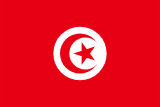
Tunisia
Tunisia
Population
12,348,573 (2025)
Average Monthly Net Salary (USD)
530
Average Mortgage Rate
9.80%
Annual GDP (USD)
57,502,836,548 (2025)
National Debt (USD)
40,210,000,000 (2025)
Unemployment Rate
15.11% (2025)
Armed Forces (active & reserve)
47,000
Military Expenditure (% GDP)
2.51% (2024)
Fertility Rate
1.82 (2024)
Life Expectancy at birth
76.7 years (2024)
Population Growth
0.58% (2025)
Net Migration
-14,523 (2025)
Notable Facts
Tunisia is the northernmost country in Africa, situated along the Mediterranean coast between Algeria to the west and Libya to the southeast. Its geography is defined by a diverse landscape that transitions from the fertile, mountainous regions of the north - dominated by the eastern extensions of the Atlas Mountains - to the central semi-arid steppes and the vast Saharan desert in the south. The country’s strategic location has made it a focal point of Mediterranean trade and military strategy for millennia. Its capital, Tunis, is built near the site of ancient Carthage and remains the political, economic, and cultural heart of the nation, housing approximately one-quarter of the total population in its greater metropolitan area.
The modern state of Tunisia is a unitary semi-presidential republic, though its political landscape has undergone significant transformation since the 2011 revolution. Following decades of authoritarian rule under Habib Bourguiba and later Zine El Abidine Ben Ali, the country adopted a new constitution in 2014 that emphasized a separation of powers. However, in 2022, a new constitution was approved via referendum, significantly expanding the powers of the presidency and reducing the influence of the parliament and judiciary. The President serves as the head of state and commander-in-chief of the armed forces, wielding substantial control over the appointment of the government and the direction of national policy.
The Tunisian economy is one of the most diverse in the Maghreb region, featuring a mix of agriculture, mining, energy, and manufacturing. The country is a significant producer of phosphates, which are processed into fertilizers for export, primarily through the industrial hub of Sfax. Unlike some of its North African neighbors, Tunisia is not an oil giant, but it possesses modest hydrocarbon reserves that contribute to domestic energy needs. The manufacturing sector is particularly strong in textiles and electrical components, largely driven by "offshore" companies that benefit from proximity to the European Union market and favorable trade agreements under the Euro-Mediterranean Partnership.