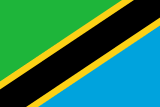
Tanzania
Tanzania
Population
70,545,865 (2025)
Average Monthly Net Salary (USD)
190
Average Mortgage Rate
15.50%
Annual GDP (USD)
90,143,496,090 (2025)
National Debt (USD)
24,620,000,000 (2025)
Unemployment Rate
1.57% (2025)
Armed Forces (active & reserve)
34,000
Military Expenditure (% GDP)
1.15% (2024)
Fertility Rate
4.54 (2024)
Life Expectancy at birth
67.2 years (2024)
Population Growth
2.86% (2025)
Net Migration
-12,730 (2025)
Notable Facts
The United Republic of Tanzania, situated on the eastern coast of Africa, is a sovereign state defined by its unique political union. Formed in 1964, the country resulted from the merger of Tanganyika, which gained independence from British rule in 1961, and the Zanzibar Archipelago, which underwent a revolution in early 1964. This union created a singular entity with a dual-governance structure: a central Union Government based in the executive capital of Dodoma and a semi-autonomous Revolutionary Government of Zanzibar. While Dodoma serves as the official seat of government and the location of the National Assembly, the coastal city of Dar es Salaam remains the country’s largest metropolis, primary port, and de facto commercial hub, anchoring the nation’s economic life.
The nation’s topography is dominated by the Great Rift Valley, a massive geological feature that splits into two distinct branches as it enters the territory. The western branch is home to Lake Tanganyika, the world’s second-deepest freshwater lake, while the eastern branch traverses a central plateau characterized by vast savannahs and rolling grasslands. In the northeast, the landscape rises dramatically to form the Kilimanjaro massif, featuring three volcanic cones: Kibo, Mawenzi, and Shira. As a dormant stratovolcano, it represents the highest point on the African continent. This varied geography creates a series of endorheic basins and drainage systems that feed into three of Africa’s largest lakes - Victoria, Tanganyika, and Malawi - effectively placing Tanzania at the hydrological crossroads of the Nile, Congo, and Zambezi river systems.
The administrative framework of the country is organized into thirty regions, with twenty-five located on the mainland and five on the islands of Zanzibar and Pemba. These regions are further subdivided into over ninety districts to facilitate local governance. The legal system is a complex blend of English common law, Islamic law, and customary law, reflecting the country's diverse historical influences. In Zanzibar, the application of Islamic law is particularly significant in matters of personal status, inheritance, and family law for the Muslim population. Conversely, the mainland system leans more heavily on statutory law derived from British colonial precedents, though it has been extensively modified since independence to reflect the socialist principles of "Ujamaa" (brotherhood) championed by the nation’s first president, Julius Nyerere.