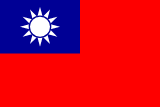
Taiwan
Taiwan
Population
23,280,273 (2026)
Average Monthly Net Salary (USD)
1,750
Average Mortgage Rate
2.15%
Annual GDP (USD)
N/A
National Debt (USD)
215,640,000,000 (2025)
Unemployment Rate
N/A
Armed Forces (active & reserve)
1,857,000
Military Expenditure (% GDP)
N/A
Fertility Rate
N/A
Life Expectancy at birth
N/A
Population Growth
N/A
Net Migration
N/A
Notable Facts
Taiwan, officially the Republic of China, is a self-governing state in East Asia located at the junction of the East and South China Seas. Its political status is defined by a complex historical dispute: while it functions as a fully independent entity with its own constitution, military, and democratically elected leadership, the People's Republic of China claims Taiwan as an integral part of its territory under its "One China" principle. Domestically, the government operates on a five-branch system known as the Five-Yuan structure - comprising the Executive, Legislative, Judicial, Examination, and Control Yuans. This unique framework, envisioned by Sun Yat-sen, separates traditional administrative functions to ensure a rigorous system of checks and balances. The President serves as the head of state and is elected by popular vote for a four-year term, while the Premier, appointed by the President, heads the Executive Yuan. This semi-presidential system has evolved significantly since the lifting of martial law in 1987, transitioning from an authoritarian past into a vibrant multi-party democracy that remains at the center of regional geopolitical considerations.
The legislative branch consists of the Legislative Yuan, a unicameral body with 113 members who serve four-year terms. The electoral system is a parallel voting structure where 73 members are elected by first-past-the-post in single-member districts, 34 are elected via party-list proportional representation, and 6 seats are reserved for indigenous populations. To ensure legislative stability, a political party must receive at least 5% of the national party vote to gain proportional seats. The assembly holds the power to pass laws, approve the national budget, and oversee the executive branch, playing a central role in the nation’s political and economic decision-making processes.
Taiwan’s judicial system is a civil law system rooted in the continental European tradition, specifically influenced by German and Japanese legal frameworks. The judiciary is headed by the Judicial Yuan, which oversees the Supreme Court, High Courts, and District Courts. A notable feature is the Council of Grand Justices, responsible for interpreting the Constitution and resolving disputes between the branches of government. While the legal system originally prioritized state interests during the authoritarian era, modern reforms have placed a heavy emphasis on due process and the protection of individual civil liberties. Judges are appointed for life to ensure independence from political interference.