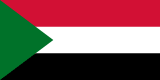
Sudan
Sudan
Population
51,662,147 (2025)
Average Monthly Net Salary (USD)
140
Average Mortgage Rate
25.00%
Annual GDP (USD)
60,162,634,574 (2025)
National Debt (USD)
34,120,000,000 (2025)
Unemployment Rate
7.53% (2022)
Armed Forces (active & reserve)
210,000
Military Expenditure (% GDP)
0.93% (2021)
Fertility Rate
4.26 (2024)
Life Expectancy at birth
66.5 years (2024)
Population Growth
2.38% (2025)
Net Migration
291,469 (2025)
Notable Facts
The Republic of the Sudan is a sovereign state in Northeast Africa, positioned at the crossroads of the Arab world and Sub-Saharan Africa. It is bordered by Egypt to the north, the Red Sea to the northeast, Eritrea and Ethiopia to the east, South Sudan to the south, the Central African Republic to the southwest, Chad to the west, and Libya to the northwest. Following the secession of South Sudan in 2011, it remains the third-largest country on the African continent. The nation’s geography is dominated by the Nile River and its tributaries, which flow through the center of the country, dividing the arid northern deserts from the more fertile central clay plains and the semi-arid savanna regions in the west and south.
The governance of Sudan is characterized by a complex political landscape currently overseen by a Transitional Sovereignty Council. This council was established following the 2019 ousting of the long-standing administration and is intended to manage the state's affairs during a transitional period toward a civilian-led government. The administrative structure is decentralized into 18 states (wilayat), which are further divided into districts. Each state is headed by a governor and possesses its own legislative and executive organs, although the central government in the administrative capital, Port Sudan (currently serving as the de facto seat of government due to instability in Khartoum), maintains authority over national security, foreign policy, and macro-economic management.
Sudan’s legal system is a pluralistic framework that incorporates elements of Islamic Sharia, English Common Law, and customary law. Under the 2019 Constitutional Document, Sharia was removed as the sole source of legislation, though many existing statutes still reflect Islamic principles, particularly in personal status laws for the Muslim majority. The judiciary is headed by a Supreme Court, and there is a Constitutional Court responsible for interpreting the supreme law of the land. In rural areas, traditional leaders often preside over customary courts to resolve local disputes. The legal environment has undergone significant shifts in recent years as the transitional authorities attempted to repeal restrictive laws and modernize the penal code.