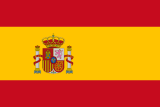
Spain
Spain
Population
49,355,143 (2025)
Average Monthly Net Salary (USD)
1,980
Average Mortgage Rate
3.85%
Annual GDP (USD)
1,906,453,309,986 (2025)
National Debt (USD)
1,745,210,000,000 (2025)
Unemployment Rate
10.38% (2025)
Armed Forces (active & reserve)
215,850
Military Expenditure (% GDP)
1.43% (2024)
Fertility Rate
1.10 (2024)
Life Expectancy at birth
83.9 years (2024)
Population Growth
1.03% (2025)
Net Migration
96,630 (2025)
Notable Facts
The Kingdom of Spain occupies the majority of the Iberian Peninsula in southwestern Europe, bordered by Portugal to the west, France and Andorra to the northeast across the Pyrenees, and the British Overseas Territory of Gibraltar to the south. It possesses a diverse coastline that meets the Atlantic Ocean to the north and west and the Mediterranean Sea to the east and south. Beyond the mainland, the national territory includes two major archipelagos: the Balearic Islands in the Mediterranean and the Canary Islands off the coast of Africa. Spain also maintains two autonomous cities, Ceuta and Melilla, as enclaves on the North African coast. This strategic geographic position has historically made Spain a bridge between Europe, Africa, and the Americas, influencing its climate, which ranges from the humid maritime north to the arid, semi-desert regions of the southeast.
The political structure of Spain is defined as a parliamentary constitutional monarchy, where the King serves as the head of state and a symbol of national unity, while executive power is exercised by the President of the Government. The country is organized into 17 Autonomous Communities and two Autonomous Cities, a system known as the "State of Autonomies." This unique administrative model grants significant self-governing powers to regions, particularly in areas like healthcare, education, and policing. The legislative branch, known as the Cortes Generales, is bicameral, consisting of the Congress of Deputies and the Senate. This decentralized governance was established by the 1978 Constitution to recognize the diverse "nationalities and regions" that compose the Spanish state while maintaining the indissoluble unity of the nation.
Spain possesses the world's second-largest number of UNESCO World Heritage Sites, a testament to its layered history involving Roman, Visigothic, Moorish, and Christian civilizations. The architectural heritage is particularly evident in cities like Granada, where the Alhambra palace stands as a premier example of Islamic art and architecture in Europe. Similarly, the Roman aqueduct of Segovia and the Gothic cathedrals of Burgos and León illustrate the engineering and artistic shifts over two millennia. This cultural depth is not limited to historical ruins but extends to modernism, most notably in Barcelona with the works of Antoni Gaudí. These sites are integrated into the modern urban fabric, serving as functional centers for administration, religion, and tourism, while anchoring the national identity in a deep historical narrative.