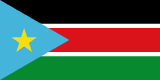
South Sudan
South Sudan
Population
12,188,788 (2025)
Average Monthly Net Salary (USD)
120
Average Mortgage Rate
18.00%
Annual GDP (USD)
11,997,800,760 (2015)
National Debt (USD)
4,210,000,000 (2025)
Unemployment Rate
12.37% (2023)
Armed Forces (active & reserve)
185,000
Military Expenditure (% GDP)
1.96% (2024)
Fertility Rate
3.79 (2024)
Life Expectancy at birth
57.7 years (2024)
Population Growth
2.03% (2025)
Net Migration
6,145 (2025)
Notable Facts
The Republic of South Sudan, situated in East-Central Africa, is the world’s youngest sovereign state, having gained independence from Sudan on July 9, 2011, following a decades-long civil conflict and a subsequent referendum. It is a landlocked country bordered by Sudan to the north, Ethiopia to the east, Kenya to the southeast, Uganda to the south, the Democratic Republic of the Congo to the southwest, and the Central African Republic to the west. The nation’s geography is dominated by the White Nile, which flows north through the center of the country. This hydrological system creates the Sudd, one of the world’s largest freshwater wetlands. The transition from the northern dry savannas to the southern tropical rainforests defines the country’s ecological zones, providing a varied landscape that supports diverse pastoral and agricultural livelihoods across its ten states and three administrative areas.
The administrative capital of South Sudan is Juba, located in Central Equatoria State along the banks of the White Nile. Juba serves as the primary seat of the Transitional Government of National Unity, housing the executive, legislative, and judicial branches. Due to rapid urbanization and the need for more centralized infrastructure, the government has proposed moving the capital to Ramciel in Lakes State, which is considered the geographical center of the country. This planned relocation is intended to alleviate the administrative burden on Juba and promote more equitable regional development. However, Juba remains the economic and diplomatic hub, hosting most international embassies, non-governmental organizations, and the country's main international airport, which connects the landlocked nation to regional markets in East Africa and beyond.
The economy of South Sudan is almost entirely dependent on its vast oil reserves, which account for nearly all of its exports and the vast majority of government revenue. The country holds the third-largest oil reserves in Sub-Saharan Africa, with most extraction occurring in the Unity and Upper Nile states. Because the country is landlocked, it relies on a network of pipelines running north through Sudan to Port Sudan on the Red Sea for international export. This dependency creates a complex economic relationship with its northern neighbor and leaves the national budget highly vulnerable to fluctuations in global oil prices and regional political stability. Efforts to diversify the economy focus on the country’s untapped potential in gold mining, forestry, and large-scale commercial agriculture.