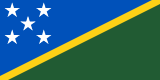
Solomon Islands
Solomon Islands
Population
838,645 (2025)
Average Monthly Net Salary (USD)
430
Average Mortgage Rate
10.50%
Annual GDP (USD)
1,749,572,443 (2025)
National Debt (USD)
420,000,000 (2025)
Unemployment Rate
1.43% (2025)
Armed Forces (active & reserve)
0
Military Expenditure (% GDP)
N/A
Fertility Rate
3.51 (2024)
Life Expectancy at birth
70.7 years (2024)
Population Growth
2.35% (2025)
Net Migration
1,631 (2025)
Notable Facts
Solomon Islands is an archipelagic nation in the South Pacific, situated east of Papua New Guinea and northwest of Vanuatu. It consists of six major islands - Guadalcanal, Malaita, Choiseul, New Georgia, Santa Isabel, and Makira - and approximately 992 smaller islands, atolls, and coral reefs. The archipelago stretches nearly 1,450 kilometers across the Coral and Solomon Seas. Geographically, the islands are predominantly volcanic in origin, characterized by rugged mountain ranges and dense tropical rainforests that cover roughly 90% of the land area. The country is located within the "Pacific Ring of Fire," making it geologically active with frequent seismic activity.
Solomon Islands is a constitutional monarchy and a member of the Commonwealth of Nations. King Charles III serves as the Head of State, represented locally by a Governor-General. The executive branch is led by a Prime Minister, who is elected by the 50-member National Parliament. The country gained its independence from the United Kingdom on July 7, 1978. Historically, the islands were first inhabited by Papuan-speaking hunter-gatherers approximately 50,000 years ago, followed by Austronesian-speaking Lapita people around 1500 BCE. The first European contact occurred in 1568 when Spanish explorer Álvaro de Mendaña arrived, naming the islands after the biblical King Solomon in the mistaken belief that they contained vast gold mines.
The economy of Solomon Islands is primarily based on agriculture, fishing, and forestry, which employ over 75% of the labor force. As of 2026, the economy is projected to grow by approximately 2.7%, supported by a rebound in the fishing industry and increased gold and nickel production. Timber has historically been the leading export, though the government is actively seeking to diversify into sustainable tourism and mineral extraction to reduce dependence on logging. The official currency is the Solomon Islands Dollar (SBD). While the country faces challenges related to infrastructure and geographic isolation, its rich marine biodiversity and World War II historical sites offer significant potential for specialized ecotourism.