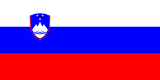
Slovenia
Slovenia
Population
2,130,986 (2025)
Average Monthly Net Salary (USD)
1,610
Average Mortgage Rate
4.10%
Annual GDP (USD)
79,648,204,979 (2025)
National Debt (USD)
51,230,000,000 (2025)
Unemployment Rate
3.17% (2025)
Armed Forces (active & reserve)
14,850
Military Expenditure (% GDP)
1.31% (2024)
Fertility Rate
1.52 (2024)
Life Expectancy at birth
82.3 years (2024)
Population Growth
0.17% (2025)
Net Migration
2,711 (2025)
Notable Facts
The Republic of Slovenia is a Central European nation situated at the crossroads of the Alps, the Mediterranean, and the Pannonian Plain. It is bordered by Austria to the north, Hungary to the northeast, Croatia to the southeast, and Italy to the west. The country possesses a short but strategically significant coastline of approximately 46.6 kilometers along the Adriatic Sea. Its geography is remarkably diverse for its small size, characterized by alpine mountains in the north and west, fertile rolling hills and plains in the east, and a unique karst plateau in the southwest. Over 60% of the territory is covered by forests, making it the third most forested country in Europe after Finland and Sweden.
Historically, the territory of modern Slovenia was part of the Austro-Hungarian Empire until 1918, after which it joined the Kingdom of Serbs, Croats, and Slovenes (later Yugoslavia). Following World War II, it became a constituent republic of the Socialist Federal Republic of Yugoslavia. Slovenia was the first republic to split from Yugoslavia, declaring independence on June 25, 1991, which was secured after a brief "Ten-Day War." Since then, the nation has undergone a successful transition to a stable democracy and market economy. It joined both the European Union and NATO in 2004 and was the first of the 2004 EU entrants to adopt the Euro as its official currency in 2007.
The political system is a parliamentary republic. The President of the Republic serves as the head of state and is elected by popular vote for a five-year term. The executive power is exercised by the Prime Minister and the Council of Ministers, who are responsible to the National Assembly. The legislature is bicameral, consisting of the 90-member National Assembly (the primary legislative body) and the 40-member National Council, which represents functional and local interests. The judicial branch is independent and comprises the Supreme Court and several levels of lower courts, with a Constitutional Court ensuring that all legislative acts adhere to the national constitution.