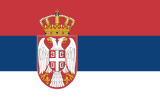
Serbia
Serbia
Population
6,549,143 (2025)
Average Monthly Net Salary (USD)
910
Average Mortgage Rate
6.15%
Annual GDP (USD)
99,953,324,473 (2025)
National Debt (USD)
36,120,000,000 (2025)
Unemployment Rate
7.12% (2025)
Armed Forces (active & reserve)
82,500
Military Expenditure (% GDP)
2.60% (2024)
Fertility Rate
1.64 (2024)
Life Expectancy at birth
76.0 years (2024)
Population Growth
-0.57% (2025)
Net Migration
-13,086 (2025)
Notable Facts
The Republic of Serbia is a landlocked country located at the crossroads of Central and Southeast Europe, covering the central part of the Balkan Peninsula. It is bordered by Hungary to the north, Romania and Bulgaria to the east, North Macedonia to the south, and Montenegro, Croatia, and Bosnia and Herzegovina to the west. Serbia also shares a contested border with Kosovo to the southwest. Geographically, the country is divided between the fertile Pannonian Plain in the north (Vojvodina) and mountainous terrain in the south, which includes parts of the Dinaric Alps, the Carpathian Mountains, and the Balkan Mountains. The Danube, Europe’s second-longest river, flows through the heart of the country, providing a vital transport link.
The modern Serbian state emerged from the disintegration of Yugoslavia, a process that began in the early 1990s and concluded with the dissolution of the State Union of Serbia and Montenegro in 2006. Serbia's history is characterized by its strategic position between the East and West; it was a medieval kingdom that reached its peak in the 14th century before falling under Ottoman rule for nearly four centuries. Following the Serbian Revolutions of the early 19th century, it regained autonomy and later independence in 1878. Throughout the 20th century, Serbia was the core of various iterations of Yugoslavia, enduring the turbulence of two World Wars and the ethnic conflicts of the 1990s.
Serbia is a unitary parliamentary constitutional republic. The President, elected by popular vote for a five-year term, serves as the head of state and represents the country abroad, while also acting as the commander-in-chief of the armed forces. The Prime Minister is the head of government, exercising executive power through the Cabinet. Legislative authority is vested in the National Assembly (Narodna skupština), a unicameral body with 250 members elected by proportional representation. The judicial system is independent and hierarchical, with the Supreme Court of Cassation serving as the highest court of appeal. Since 2012, Serbia has been an official candidate for membership in the European Union.