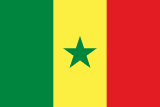
Senegal
Senegal
Population
18,931,966 (2025)
Average Monthly Net Salary (USD)
260
Average Mortgage Rate
7.50%
Annual GDP (USD)
37,006,536,238 (2025)
National Debt (USD)
29,820,000,000 (2025)
Unemployment Rate
2.73% (2025)
Armed Forces (active & reserve)
24,600
Military Expenditure (% GDP)
1.57% (2024)
Fertility Rate
3.77 (2024)
Life Expectancy at birth
68.9 years (2024)
Population Growth
2.30% (2025)
Net Migration
-12,636 (2025)
Notable Facts
The Republic of Senegal is the westernmost country on the African mainland, situated at a strategic intersection of maritime and aerial routes connecting Africa, Europe, and the Americas. It is bordered by the Atlantic Ocean to the west, Mauritania to the north and northeast, Mali to the east, and Guinea and Guinea-Bissau to the south. A unique geographical feature of the nation is that it nearly surrounds The Gambia, a small country occupying a narrow strip of land along the Gambia River. The landscape is predominantly composed of the rolling sandy plains of the western Sahel, which gradually transition into more tropical vegetation and low foothills in the southeast.
The modern state of Senegal achieved independence from France on April 4, 1960. Initially, it formed part of the Mali Federation alongside the French Soudan (now Mali), but the union dissolved only months later due to internal political tensions. Since then, Senegal has distinguished itself as one of the most stable democracies on the African continent, having never experienced a military coup or significant period of authoritarian rule. The first president, Léopold Sédar Senghor, was a world-renowned poet and philosopher who led the country for two decades before voluntarily stepping down, setting a precedent for peaceful leadership transitions that continues to define the nation's political culture.
The governance of Senegal is structured as a presidential republic. The President serves as both the head of state and the head of government, wielding significant executive authority, including the appointment of the Prime Minister and the Council of Ministers. Legislative power is vested in the National Assembly, a unicameral body whose members are elected through a mix of direct plurality and proportional representation. The judicial system is independent and based on the French civil law model, with a Constitutional Council and a Supreme Court overseeing the legality of government acts. This institutional framework is designed to balance centralized executive power with parliamentary oversight and judicial review.