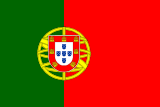
Portugal
Portugal
Population
10,804,871 (2025)
Average Monthly Net Salary (USD)
1,410
Average Mortgage Rate
4.10%
Annual GDP (USD)
346,639,825,142 (2025)
National Debt (USD)
254,230,000,000 (2025)
Unemployment Rate
6.16% (2025)
Armed Forces (active & reserve)
231,000
Military Expenditure (% GDP)
1.53% (2024)
Fertility Rate
1.41 (2024)
Life Expectancy at birth
82.4 years (2024)
Population Growth
1.03% (2025)
Net Migration
16,472 (2025)
Notable Facts
The Portuguese Republic is the westernmost sovereign state of mainland Europe, occupying the southwestern portion of the Iberian Peninsula. It is bordered by Spain to the north and east and by the Atlantic Ocean to the west and south. The territory also includes two significant autonomous regions: the archipelagos of the Azores and Madeira, which are situated in the North Atlantic. Geographically, Portugal is divided by the Tagus River; the north is characterized by rugged, mountainous terrain and a cooler, rainier climate, while the south consists of rolling plains and a warmer, Mediterranean-influenced environment.
Portugal is one of the oldest nation-states in Europe, with its current borders having remained remarkably stable since the 13th century. It emerged as an independent kingdom in 1139 under Afonso Henriques, the first King of Portugal, following centuries of Roman and later Moorish rule. The Reconquista, the period in which Christian kingdoms retook the peninsula from Muslim Al-Andalus, concluded in Portugal with the conquest of the Algarve in 1249. This early consolidation allowed the country to focus on maritime expansion and state-building long before many of its European neighbors.
The "Age of Discovery" in the 15th and 16th centuries transformed Portugal into a global maritime superpower. Initiated by Prince Henry the Navigator, Portuguese explorers like Vasco da Gama discovered the sea route to India, while Pedro Álvares Cabral reached Brazil. This era saw the establishment of the first global empire, stretching from South America to Africa and Southeast Asia. The wealth generated from the spice trade, gold, and later sugar made Lisbon one of the most affluent cities in the world and funded the "Manueline" architectural style, a uniquely Portuguese Late Gothic aesthetic.