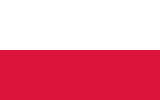
Poland
Poland
Population
36,435,861 (2025)
Average Monthly Net Salary (USD)
1,620
Average Mortgage Rate
7.45%
Annual GDP (USD)
1,035,491,784,197 (2025)
National Debt (USD)
486,120,000,000 (2025)
Unemployment Rate
2.98% (2025)
Armed Forces (active & reserve)
163,000
Military Expenditure (% GDP)
4.15% (2024)
Fertility Rate
1.14 (2024)
Life Expectancy at birth
78.4 years (2024)
Population Growth
-0.34% (2025)
Net Migration
-330,820 (2025)
Notable Facts
The Republic of Poland is a unitary state located in Central Europe, serving as a physical and geopolitical bridge between the Western European plains and the Eastern European forest-steppes. The country shares land borders with seven nations: Germany to the west, the Czech Republic and Slovakia to the south, Ukraine and Belarus to the east, and Lithuania and the Russian exclave of Kaliningrad to the northeast. Its northern boundary is defined by a 440-kilometer coastline along the Baltic Sea. Geographically, the nation is characterized by a dramatic transition from the low-lying northern plains and lake districts to the high alpine peaks of the Tatra Mountains in the south, which form part of the Carpathian range.
The administrative structure of Poland is organized into a three-tier system of local government introduced in 1999. The primary divisions are the 16 voivodeships (provinces), which possess significant autonomy and are led by an elected assembly called a Sejmik. These provinces are further subdivided into 380 powiats (counties), which include 66 "cities with powiat status" that combine municipal and county-level functions. The most basic unit of administration is the gmina (commune or municipality), of which there are nearly 2,500. This decentralized model was designed to distribute executive and legislative authority more efficiently across the diverse historical regions of the country, moving away from the centralized systems of the previous era.
Poland’s constitution, adopted in 1997, establishes a parliamentary representative democratic republic based on the separation of powers among the legislative, executive, and judicial branches. Legislative power is vested in a bicameral Parliament consisting of the 460-seat Sejm (Lower House) and the 100-seat Senate (Upper House). The executive branch is shared between the President, who is the head of state and supreme commander of the armed forces, and the Council of Ministers, led by the Prime Minister as the head of government. The judiciary is independent of the other branches and includes the Supreme Court, the Constitutional Tribunal, and a network of common, administrative, and military courts, ensuring a robust framework for the rule of law.