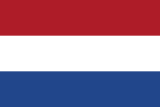
Netherlands
Netherlands
Population
18,087,633 (2025)
Average Monthly Net Salary (USD)
3,350
Average Mortgage Rate
4.10%
Annual GDP (USD)
1,332,767,651,100 (2025)
National Debt (USD)
511,820,000,000 (2025)
Unemployment Rate
3.87% (2025)
Armed Forces (active & reserve)
63,000
Military Expenditure (% GDP)
1.92% (2024)
Fertility Rate
1.43 (2024)
Life Expectancy at birth
82.0 years (2024)
Population Growth
0.52% (2025)
Net Migration
104,681 (2025)
Notable Facts
The Netherlands is a low-lying country situated in Northwestern Europe, with approximately 26% of its land area located below sea level. This unique geography is the result of centuries of land reclamation, a process known as "poldering," where areas of water are enclosed by dikes and pumped dry. Much of the country is part of the vast delta formed by the confluence of three major European rivers: the Rhine, the Meuse, and the Scheldt. These rivers, along with an extensive network of canals, have historically made the Netherlands a central hub for maritime trade and transport. The landscape is predominantly flat, with the highest point, Vaalserberg, reaching only 322 meters above sea level in the far southeast where the borders of the Netherlands, Belgium, and Germany meet.
The Delta Works is one of the most sophisticated engineering projects in the world, consisting of a series of dams, sluices, locks, dykes, and storm surge barriers designed to protect the Dutch coastline from flooding. This massive infrastructure project was initiated following the devastating North Sea flood of 1953, which inundated large portions of the southwestern province of Zeeland. The centerpiece of the system is the Oosterscheldekering, a storm surge barrier that remains open under normal conditions to allow for tidal movement and preserve the marine ecosystem but can be closed during extreme weather events. These defenses are critical to the country's national security, as a significant portion of the population and the economic heartland, including the city of Rotterdam, reside in flood-prone areas.
The Netherlands is a constitutional monarchy with a parliamentary system, where the King serves as the formal head of state with primarily ceremonial duties. The executive power is held by the Prime Minister and the Council of Ministers, who are responsible to the States-General, the bicameral Dutch parliament. The parliament consists of the House of Representatives (Tweede Kamer), which is the primary legislative body elected by proportional representation, and the Senate (Eerste Kamer), which is elected by the members of the twelve provincial councils. The Dutch political landscape is characterized by a "polder model" of consensus-based decision-making, which encourages cooperation between the government, labor unions, and employers’ organizations to achieve socio-economic stability.