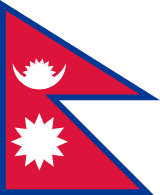
Nepal
Nepal
Population
29,618,118 (2025)
Average Monthly Net Salary (USD)
260
Average Mortgage Rate
12.50%
Annual GDP (USD)
45,489,810,283 (2025)
National Debt (USD)
22,010,000,000 (2025)
Unemployment Rate
10.46% (2025)
Armed Forces (active & reserve)
131,000
Military Expenditure (% GDP)
0.98% (2024)
Fertility Rate
1.96 (2024)
Life Expectancy at birth
70.6 years (2024)
Population Growth
-0.11% (2025)
Net Migration
-364,699 (2025)
Notable Facts
The geography of Nepal is defined by an extreme altitudinal gradient, rising from the Gangetic Plain in the south to the crest of the Himalayas in the north. This dramatic transition occurs across three distinct ecological belts: the Terai, the Pahad (Middle Hills), and the Himal (High Mountains). The Terai is a low-lying tropical region that serves as the country’s agricultural heartland, characterized by fertile alluvial soil and dense forests. Moving northward, the Middle Hills reach elevations between 600 and 3,000 meters, featuring complex terrace farming and ancient river valleys. The northernmost belt, the Himal, contains some of the highest peaks on Earth, including eight of the world's fourteen mountains exceeding 8,000 meters. This unique physical structure creates a climate that ranges from subtropical heat to perpetual arctic cold within a relatively narrow latitudinal span.
Nepal operates as a federal parliamentary republic, a political structure established following the promulgation of the 2015 Constitution. This document marked the culmination of a decade-long transition from a centuries-old Hindu monarchy to a secular democratic state. The government is divided into three tiers: federal, provincial, and local. At the federal level, the President serves as the ceremonial head of state and commander-in-chief, while executive power is vested in the Prime Minister and the Council of Ministers. The legislative branch is bicameral, consisting of the House of Representatives and the National Assembly. Administratively, the country is partitioned into seven provinces, each with its own provincial assembly and chief minister, designed to decentralize power from the historically dominant capital, Kathmandu.
The unification of modern Nepal began in the mid-18th century under the leadership of King Prithvi Narayan Shah of the Gorkha Kingdom. Prior to this, the region was a fragmented collection of small principalities, including the three competitive Malla kingdoms of the Kathmandu Valley. Shah’s military campaigns successfully consolidated these territories, establishing a unified Gorkhali state by 1768. This period of expansion brought the kingdom into direct conflict with the British East India Company, resulting in the Anglo-Nepalese War of 1814–1816. The subsequent Treaty of Sugauli defined Nepal’s modern borders, ceding significant territory to the British while maintaining the country's sovereignty. Unlike many of its neighbors, Nepal was never formally colonized, a distinction that has profoundly shaped its national identity and diplomatic history.