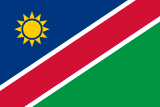
Namibia
Namibia
Population
3,092,816 (2025)
Average Monthly Net Salary (USD)
675
Average Mortgage Rate
11.75%
Annual GDP (USD)
15,080,340,654 (2025)
National Debt (USD)
8,920,000,000 (2025)
Unemployment Rate
19.29% (2025)
Armed Forces (active & reserve)
16,000
Military Expenditure (% GDP)
2.73% (2024)
Fertility Rate
3.21 (2024)
Life Expectancy at birth
67.5 years (2024)
Population Growth
2.05% (2025)
Net Migration
1,866 (2025)
Notable Facts
Namibia’s administrative framework consists of fourteen regions, a structure that has evolved since independence to replace the ethnic "homelands" of the colonial era. These regions, such as Khomas, Erongo, and Kunene, are further subdivided into 121 constituencies. The Delimitation Commission, a statutory body appointed by the President, periodically reviews these boundaries based on population shifts and geographic factors rather than ethnic lines. Each region is governed by a Regional Council, which elects representatives to the National Council, the upper house of Parliament. This decentralized system is intended to facilitate local development and infrastructure management while the central government in Windhoek maintains authority over national policy, security, and the judiciary.
The physical geography of the nation is defined by the Great Escarpment, which separates the narrow coastal desert from the high-altitude central plateau. This plateau runs from north to south and sits at an average elevation of 1,100 to 1,700 meters, containing the nation’s highest peak, the Königstein in the Brandberg Massif. To the east, the plateau transitions into the sand-filled basins of the Kalahari Desert. To the west, the land drops sharply toward the Namib Desert. This rugged interior topography has historically dictated settlement patterns, with the majority of the population concentrated on the flatter, more fertile northern plains or within the sheltered valleys of the central highlands where groundwater is more accessible.
The Namib Desert, stretching approximately 2,000 kilometers along the Atlantic coast, is widely considered the oldest desert in the world, with arid conditions persisting for at least 55 million years. Its most striking feature is the Namib Sand Sea, a UNESCO World Heritage site characterized by massive, migrating star dunes that can reach heights of over 300 meters. The desert's unique ecosystem is sustained by the "Caspian" fogs generated when the cold Benguela Current meets the warm air of the interior. This moisture allows for highly specialized flora and fauna to survive in an environment that receives less than 10 mm of annual rainfall, including the Welwitschia mirabilis, a plant capable of living for over 1,500 years.