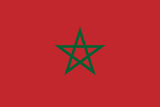
Morocco
Morocco
Population
38,430,770 (2025)
Average Monthly Net Salary (USD)
510
Average Mortgage Rate
4.75%
Annual GDP (USD)
182,374,250,612 (2025)
National Debt (USD)
102,480,000,000 (2025)
Unemployment Rate
9.00% (2025)
Armed Forces (active & reserve)
446,000
Military Expenditure (% GDP)
3.52% (2024)
Fertility Rate
2.21 (2024)
Life Expectancy at birth
75.5 years (2024)
Population Growth
0.91% (2025)
Net Migration
-56,254 (2025)
Notable Facts
The Kingdom of Morocco is a constitutional monarchy defined by the 2011 Constitution, which establishes the King as the "Commander of the Faithful" (Amir Al-Mouminine) and the supreme head of the state. While the country has a Prime Minister who leads the government, the King retains significant executive powers, including the authority to appoint the Prime Minister from the winning political party and to dismiss cabinet members. The legislative branch is bicameral, consisting of the House of Representatives, whose 395 members are directly elected, and the House of Councillors, whose members are indirectly elected. This system represents a blend of traditional monarchical authority and modern parliamentary processes, with the King also serving as the head of the Supreme Council of the Judiciary and the Commander-in-Chief of the Royal Armed Forces.
The demographic profile of Morocco is characterized by a fusion of Arab and Berber (Amazigh) identities, which together account for approximately 99% of the population. While the majority of citizens identify with this blended heritage, the Berber population remains the indigenous core of the nation, with distinct languages such as Tachelhit, Tamazight, and Tarafit spoken alongside the official languages of Arabic and Tamazight. The population is estimated at over 37 million, with a significant concentration in the Atlantic coastal plains and the fertile valleys of the Atlas Mountains. Smaller minority groups include Haratin and Gnawa populations with sub-Saharan roots, as well as a tiny Jewish community that represents a long-standing historical presence. This ethnic tapestry is unified by Islam, the state religion practiced by the vast majority, though the constitution provides for the free exercise of other beliefs.
The judicial system of Morocco is a complex synthesis of French civil law, Islamic Sharia, and customary Berber traditions. The 2011 constitutional reforms aimed to strengthen the independence of the judiciary by creating the Superior Council of the Judicial Power, presided over by the King. The court hierarchy includes Communal and District Courts for minor cases, Courts of First Instance, Courts of Appeal, and the Court of Cassation, which is the highest judicial body. While civil, commercial, and administrative laws are heavily modeled on the French Napoleonic Code, family law - governed by the Mudawana - is rooted in Maliki Islamic jurisprudence. This code regulates matters of marriage, divorce, and inheritance, having undergone significant modernization in 2004 to enhance legal protections within the domestic sphere while maintaining its religious foundations.