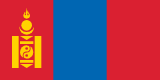
Mongolia
Mongolia
Population
3,568,978 (2025)
Average Monthly Net Salary (USD)
590
Average Mortgage Rate
14.50%
Annual GDP (USD)
25,369,107,325 (2025)
National Debt (USD)
9,840,000,000 (2025)
Unemployment Rate
5.23% (2025)
Armed Forces (active & reserve)
18,000
Military Expenditure (% GDP)
0.74% (2024)
Fertility Rate
2.50 (2024)
Life Expectancy at birth
72.4 years (2024)
Population Growth
1.25% (2025)
Net Migration
79 (2025)
Notable Facts
Mongolia is a landlocked sovereign state situated in East Asia, positioned between the Russian Federation to the north and the People's Republic of China to the south. It is the world's second-largest landlocked country and possesses the lowest population density of any independent nation. Since the democratic revolution of 1990, the country has operated as a semi-presidential representative democratic republic. The legislative power is vested in the State Great Khural, a unicameral parliament consisting of 126 members. While the President is the head of state and commander-in-chief of the armed forces, the Prime Minister serves as the head of government, leading the cabinet. This political structure was designed to prevent the return of the totalitarianism that characterized the decades of the Mongolian People's Republic.
The demographic profile of Mongolia is notably homogeneous, with ethnic Mongols comprising approximately 95% of the population. The largest subgroup is the Khalkha Mongols, who make up over 80% of the total citizenry. The remaining 5% of the population consists primarily of Kazakhs, a Turkic ethnic group concentrated in the western province of Bayan-Ölgii, as well as smaller groups of Tuvan and Tsaatan people. The official language is Mongolian, written in the Cyrillic alphabet since 1941, although the traditional vertical Mongolian script remains a symbol of national heritage and is increasingly taught in schools. Despite its vast territory, nearly half of the nation's 3.4 million people reside in the capital city, Ulaanbaatar, reflecting a massive shift from nomadic to urban life over the last thirty years.
Ulaanbaatar, the capital and largest city, serves as the industrial, financial, and cultural hub of the nation. Founded in 1639 as a migratory Buddhist monastic center, the city went through several name changes before being named Ulaanbaatar (Red Hero) in 1924. It is situated in the valley of the Tuul River at an elevation of about 1,350 meters. The city’s architecture is a stark juxtaposition of Soviet-era apartment blocks, modern glass skyscrapers, and sprawling "ger districts" on the periphery, where residents live in traditional felt tents and burn coal for heating. Due to its high altitude and inland position, Ulaanbaatar holds the distinction of being the coldest national capital in the world, with average winter temperatures frequently dropping below -30°C.