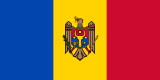
Moldova
Moldova
Population
2,360,527 (2025)
Average Monthly Net Salary (USD)
640
Average Mortgage Rate
10.80%
Annual GDP (USD)
20,351,796,275 (2025)
National Debt (USD)
5,210,000,000 (2025)
Unemployment Rate
1.50% (2025)
Armed Forces (active & reserve)
6,000
Military Expenditure (% GDP)
0.60% (2024)
Fertility Rate
1.73 (2024)
Life Expectancy at birth
71.3 years (2024)
Population Growth
-1.75% (2025)
Net Migration
-29,766 (2025)
Notable Facts
The Republic of Moldova is a landlocked sovereign state located in Eastern Europe, positioned between Romania to the west and Ukraine to the north, east, and south. Following the collapse of the Soviet Union, it declared its independence in 1991, establishing a parliamentary republic. The political system is defined by a 101-seat unicameral Parliament, which holds the power to appoint the Prime Minister as the head of government. While the President serves as the head of state and is elected by popular vote, the executive power is primarily shared with the cabinet. The country is a member of several international organizations, including the United Nations and the Council of Europe, and it officially maintains a policy of permanent neutrality, as enshrined in its 1994 Constitution.
The demographic profile of Moldova is characterized by an ethnic majority of Moldovans, who share a close linguistic and cultural heritage with Romanians. According to national census data, approximately 75% of the population identifies as Moldovan, while smaller minorities include Ukrainians, Russians, Gagauz, and Bulgarians. The official language is Romanian, although the term "Moldovan" was historically used in political contexts to distinguish the national identity. Russian remains widely spoken as a language of inter-ethnic communication, particularly in urban areas and within the breakaway region of Transnistria. The population is largely concentrated in rural areas, making Moldova one of the least urbanized countries in Europe.
Moldova’s territory largely corresponds to the historical region of Bessarabia, which has been a crossroads of empires for centuries. In the 14th century, the Principality of Moldavia emerged as a significant regional power under the rule of Stephen the Great, who is celebrated as a national hero for his defense against Ottoman, Polish, and Hungarian incursions. However, by the early 16th century, the principality became a vassal state of the Ottoman Empire. In 1812, following the Russo-Turkish War, the eastern half of the principality (Bessarabia) was ceded to the Russian Empire. This historical division created a distinct trajectory for the territory, which later saw brief unification with Romania after World War I before being annexed by the Soviet Union in 1940.