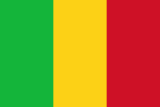
Mali
Mali
Population
25,198,821 (2025)
Average Monthly Net Salary (USD)
145
Average Mortgage Rate
9.00%
Annual GDP (USD)
30,069,148,581 (2025)
National Debt (USD)
10,720,000,000 (2025)
Unemployment Rate
2.83% (2025)
Armed Forces (active & reserve)
41,000
Military Expenditure (% GDP)
4.20% (2024)
Fertility Rate
5.51 (2024)
Life Expectancy at birth
60.7 years (2024)
Population Growth
2.90% (2025)
Net Migration
-48,019 (2025)
Notable Facts
The Republic of Mali is a landlocked sovereign state located in the interior of West Africa, positioned primarily within the Saharan and Sahelian regions. Geographically, it is bordered by seven countries: Algeria to the north, Niger to the east, Burkina Faso and Côte d'Ivoire to the south, Guinea to the south-west, and Senegal and Mauritania to the west. The nation’s northern reaches extend deep into the Sahara Desert, while the southern part of the country features the more fertile basins of the Niger and Senegal rivers. This northern-southern divide dictates much of the country's demographic distribution and economic activity, with the vast majority of the population concentrated in the south where water is more accessible for permanent settlement.
The Niger River serves as the vital hydrographic artery of the country, flowing in a large arc through the heart of the territory. It enters Mali from Guinea in the southwest and flows through the capital, Bamako, before heading northeast toward the edge of the Sahara. Near Mopti, the river forms a massive internal delta, a complex network of seasonal lakes and floodplains that supports significant fishing, rice cultivation, and livestock grazing. This "Inland Niger Delta" is one of the most important ecological and economic zones in West Africa, providing a seasonal heartbeat for the nation's interior trade and food security as the waters rise and recede annually.
Historically, the territory of modern Mali was the epicenter of three of the most powerful and wealthy empires in African history: the Ghana, Mali, and Songhai Empires. The Mali Empire, which reached its zenith in the 14th century under the rule of Mansa Musa I, was renowned across the medieval world for its immense wealth, particularly in gold. During this period, the empire controlled the lucrative trans-Saharan trade routes that linked the gold mines of the south with the salt mines of the Sahara and the markets of North Africa and Europe. This era established the region as a global center of commerce and Islamic scholarship.