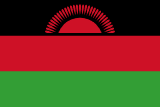
Malawi
Malawi
Population
22,216,120 (2025)
Average Monthly Net Salary (USD)
110
Average Mortgage Rate
24.00%
Annual GDP (USD)
14,918,276,698 (2025)
National Debt (USD)
9,120,000,000 (2025)
Unemployment Rate
5.07% (2025)
Armed Forces (active & reserve)
15,000
Military Expenditure (% GDP)
1.02% (2024)
Fertility Rate
3.59 (2024)
Life Expectancy at birth
67.6 years (2024)
Population Growth
2.56% (2025)
Net Migration
-5,628 (2025)
Notable Facts
The Republic of Malawi is a landlocked nation located in Southeast Africa, defined largely by its position within the Great Rift Valley system. This tectonic setting has created a dramatic longitudinal landscape, dominated by the massive Lake Malawi, which runs nearly the entire length of the country’s eastern border. The country’s geology is characterized by ancient crystalline basement rocks of the Precambrian era, which have been uplifted to form high plateaus and isolated mountain massifs. To the north, the Nyika Plateau reaches elevations of over 2,500 meters, while in the south, the Shire Highlands and the massive Mulanje Massif - an inselberg of syenite and granite - tower over the surrounding plains. This vertical diversity creates distinct ecological zones within a relatively compact territorial footprint, influencing everything from local weather patterns to the distribution of the nation's agricultural activities and natural resources.
The historical foundations of modern Malawi are rooted in the migration of Bantu-speaking peoples who arrived in the region between the 1st and 4th centuries CE. These early inhabitants brought iron-working technology and agricultural practices, displacing or absorbing the indigenous hunter-gatherer populations. By the 15th century, the Maravi Confederacy emerged as a significant regional power under the leadership of the Kalonga dynasty. At its height, the Maravi Empire stretched from the Luangwa River in modern-day Zambia to the coast of Mozambique. The name "Malawi" is derived from "Maravi," which means "flames," thought to refer to the sight of many kilns for smelting iron glowing in the night sky. This period established the linguistic and cultural dominance of the Chewa people, who remain the largest ethnic group in the country today, providing a sense of historical continuity that predates European colonial intervention.
Lake Malawi, also known as Lake Nyasa, is the third-largest lake in Africa and the defining geographical and economic feature of the country. Formed by the tectonic spreading of the East African Rift, it is one of the deepest freshwater lakes in the world, reaching depths of over 700 meters. The lake is globally renowned among biologists for its extraordinary biodiversity, specifically its cichlid fish populations. There are estimated to be over 1,000 species of cichlids in the lake, nearly all of which are endemic. This phenomenon is a classic example of adaptive radiation, where a single ancestral species evolved into hundreds of specialized forms to occupy different ecological niches. Beyond its scientific value, the lake provides a vital source of protein for the national population and supports a large-scale artisanal fishing industry that is essential to the rural economy along the lakeshore.