Luxembourg
Luxembourg
Population
686,970 (2025)
Average Monthly Net Salary (USD)
4,180
Average Mortgage Rate
3.65%
Annual GDP (USD)
101,157,829,491 (2025)
National Debt (USD)
25,230,000,000 (2025)
Unemployment Rate
6.34% (2025)
Armed Forces (active & reserve)
1,000
Military Expenditure (% GDP)
0.96% (2024)
Fertility Rate
1.25 (2024)
Life Expectancy at birth
83.2 years (2024)
Population Growth
1.46% (2025)
Net Migration
5,237 (2025)
Notable Facts
The Grand Duchy of Luxembourg, a landlocked nation in Western Europe, is the world’s only remaining sovereign grand duchy. Its political origin is traditionally dated to 963 AD, when Count Siegfried of Ardennes acquired the rocky promontory known as Lucilinburhuc through an exchange with the Abbey of Saint-Maximin in Trier. Strategically positioned between the Kingdom of France and the German states, Luxembourg grew into a formidable military fortress often referred to as the "Gibraltar of the North." Its status as a sovereign state was solidified during the 19th century, specifically by the 1839 Treaty of London, which saw the country lose more than half of its territory to Belgium while gaining greater autonomy from the Netherlands. The 1867 Treaty of London later declared the nation "perpetually neutral" and mandated the demolition of its extensive fortifications, setting the stage for its modern development as a peaceful, diplomatic hub.
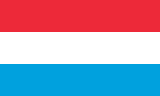
The national flag consists of three horizontal bands of red, white, and sky blue. Although used since the 1848 revolution, it was only formally adopted in 1972. The colors are derived from the 13th-century coat of arms of the House of Luxembourg, which features a red lion rampant on a field of white and blue stripes. While the flag is visually similar to that of the Netherlands, Luxembourg’s blue is significantly lighter and the proportions are distinct. In addition to the tricolor, the "Roude Léiw" (Red Lion) ensign serves as a secondary national symbol, predominantly used for maritime and civil aviation purposes. This heraldic banner represents the historical continuity of the grand ducal house and remains a popular cultural emblem, often seen at sporting events and national celebrations as a mark of distinct identity.
The government of Luxembourg is a representative democracy under the form of a constitutional monarchy. The Grand Duke serves as the Head of State, but his role is primarily symbolic and ceremonial; he possesses the power to appoint the Prime Minister and the Cabinet, though he acts on the advice of the Parliament. Legislative power is vested in the Chamber of Deputies, a unicameral body composed of 60 members elected for five-year terms through a system of proportional representation across four electoral districts: South, Centre, North, and East. A unique feature of the system is the Council of State, an advisory body of 21 citizens appointed by the Grand Duke who review all draft legislation before it can be voted upon. This ensures a multi-layered review process that maintains legal consistency and constitutional adherence.