Liechtenstein
Liechtenstein
Population
41,024 (2025)
Average Monthly Net Salary (USD)
6,250
Average Mortgage Rate
2.10%
Annual GDP (USD)
8,905,764,270 (2024)
National Debt (USD)
20,410,000 (2025)
Unemployment Rate
N/A
Armed Forces (active & reserve)
0
Military Expenditure (% GDP)
N/A
Fertility Rate
1.37 (2024)
Life Expectancy at birth
84.2 years (2024)
Population Growth
1.41% (2025)
Net Migration
194 (2025)
Notable Facts
The Principality of Liechtenstein traces its contemporary political identity to the year 1719, when the Holy Roman Emperor Charles VI elevated the joined territories of Schellenberg and Vaduz to the status of an Imperial Principality. This unification was the result of strategic land acquisitions by the House of Liechtenstein, a wealthy Austrian noble family that sought a seat in the Imperial Diet, which required ownership of lands held directly under the Emperor. Following the dissolution of the Holy Roman Empire in 1806, the nation achieved full sovereignty through its membership in the Confederation of the Rhine. Throughout the 19th century, it maintained close administrative and economic ties with the Austro-Hungarian Empire, but the collapse of that empire after World War I necessitated a fundamental shift in foreign policy, leading to the 1923 Customs Treaty with Switzerland.
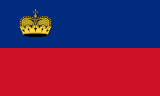
The national flag consists of two equal horizontal bands of blue and red, featuring a gold princely crown located in the upper hoist-side corner. Historically, the blue and red colors are derived from the 18th-century livery of the princely household, symbolizing the sky and the embers of the hearth respectively. The crown was officially added to the design in 1937 to ensure the flag remained distinguishable from that of Haiti during the Summer Olympics in Berlin. As a national symbol, the crown represents the unity of the people and the princely house, reflecting the nation's status as a hereditary constitutional monarchy. The colors are also mirrored in various state insignias and are a core element of the country's formal identity in international diplomatic and sporting contexts.
The 1921 Constitution establishes a unique dualist system of government where the Reigning Prince and the people share equal sovereign power. Unlike most European constitutional monarchies, the Prince of Liechtenstein retains significant political authority, including the power to veto legislation, dissolve parliament, and appoint judges, though these actions often require the countersignature of the Prime Minister. This balance is maintained through a robust system of direct democracy, allowing citizens the right of initiative and referendum on almost any legislative or constitutional matter. The executive branch is headed by a five-member Cabinet, including the Prime Minister and four Ministers, who are proposed by the Parliament and formally appointed by the Prince to serve four-year terms. This structure ensures that governance is a collaborative effort between the hereditary head of state and the democratically elected representatives.