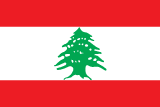
Lebanon
Lebanon
Population
5,849,421 (2025)
Average Monthly Net Salary (USD)
210
Average Mortgage Rate
22.00%
Annual GDP (USD)
25,971,643,441 (2024)
National Debt (USD)
102,170,000,000 (2023)
Unemployment Rate
10.98% (2023)
Armed Forces (active & reserve)
80,000
Military Expenditure (% GDP)
2.59% (2024)
Fertility Rate
2.23 (2024)
Life Expectancy at birth
77.9 years (2024)
Population Growth
0.75% (2025)
Net Migration
-10,230 (2025)
Notable Facts
The geography of Lebanon is dominated by two mountain ranges running parallel to the Mediterranean coast: the Lebanon Mountains to the west and the Anti-Lebanon Mountains to the east. Between these two ranges lies the Beqaa Valley, a fertile plateau that serves as the country's primary agricultural heartland. Unlike most of its neighbors in the Middle East, Lebanon lacks true desert terrain. Its landscape is characterized by rugged limestone peaks, deep gorges, and narrow coastal plains. The highest point is Qurnat as Sawda', reaching an elevation of 3,088 meters. This mountainous topography has historically provided a refuge for various religious and ethnic minorities, shaping the social and political fabric of the nation.
The political system of Lebanon is unique globally, operating under a framework known as confessionalism. This power-sharing mechanism, established by the National Pact of 1943 and later refined by the 1989 Taif Agreement, distributes political and institutional power among the country's diverse religious communities. By convention, the President of the Republic must be a Maronite Christian, the Prime Minister a Sunni Muslim, and the Speaker of Parliament a Shia Muslim. The 128 seats in the unicameral Parliament are divided equally between Christians and Muslims, further subdivided among various denominations. While intended to ensure stability and representation for 18 officially recognized sects, this system often leads to prolonged political deadlocks during the formation of governments or the election of a president.
Lebanon is home to five UNESCO World Heritage sites, each reflecting a different era of its ancient history. Baalbek, located in the Beqaa Valley, contains some of the best-preserved Roman temple ruins in the world, including the massive Temple of Jupiter and the nearly intact Temple of Bacchus. Byblos, one of the oldest continuously inhabited cities in the world, provides archaeological evidence of Phoenician, Roman, and Crusader civilizations. The Umayyad city of Anjar represents an 8th-century inland commercial hub, while Tyre preserves significant Roman hippodromes and maritime ruins. Finally, the Ouadi Qadisha (the Holy Valley) serves as a testament to early Christian monasticism, with its rugged cliffs housing numerous rock-cut monasteries and chapels.