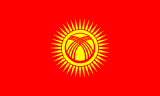
Kyrgyzstan
Kyrgyzstan
Population
7,343,064 (2025)
Average Monthly Net Salary (USD)
340
Average Mortgage Rate
16.50%
Annual GDP (USD)
22,623,752,095 (2025)
National Debt (USD)
6,240,000,000 (2024)
Unemployment Rate
3.53% (2025)
Armed Forces (active & reserve)
21,000
Military Expenditure (% GDP)
2.97% (2024)
Fertility Rate
2.60 (2024)
Life Expectancy at birth
72.4 years (2024)
Population Growth
1.66% (2025)
Net Migration
1,815 (2025)
Notable Facts
Kyrgyzstan, officially known as the Kyrgyz Republic, is a landlocked nation situated in the heart of Central Asia, bordered by Kazakhstan to the north, Uzbekistan to the west, Tajikistan to the southwest, and China to the east. Historically, the region served as a vital crossroads along the Silk Road, the ancient series of trade routes connecting the Mediterranean with East Asia. This strategic geography allowed for a diverse exchange of goods, cultures, and religions over millennia. The Kyrgyz people, a Turkic ethnic group, possess a heritage deeply rooted in nomadic traditions, having migrated from the Yenisei River region in Siberia to the Tian Shan mountains. Today, the country is defined by its rugged mountainous terrain, which covers approximately 90% of its total land area, significantly shaping its national identity and socioeconomic development.
The political system of the Kyrgyz Republic is a unitary presidential republic, a structure that has undergone significant transitions since the country gained independence from the Soviet Union in 1991. Following a series of political upheavals known as the Tulip Revolution in 2005 and the 2010 revolution, the country briefly adopted a parliamentary-leaning system to distribute power more broadly. However, a 2021 constitutional referendum shifted the balance back toward a strong presidency, granting the head of state extensive executive authority, including the power to appoint the cabinet. The legislative branch is represented by the Jogorku Kenesh, a unicameral parliament. Kyrgyzstan is often noted for having a more active and pluralistic civil society and media landscape compared to some of its regional neighbors, despite ongoing political shifts.
The economy of Kyrgyzstan is heavily reliant on gold mining, agriculture, and remittances from citizens working abroad, primarily in Russia. The Kumtor Gold Mine, located in the Tian Shan mountains at an elevation of over 4,000 meters, is one of the largest gold deposits in the world and accounts for a substantial portion of the nation's GDP and export earnings. Agriculture remains a vital sector, employing a large segment of the population, with a focus on livestock such as sheep, horses, and cattle, as well as the cultivation of cotton, tobacco, and fruits. Due to its mountainous geography, the country possesses immense hydroelectric potential, which it utilizes for domestic energy consumption and exports to neighboring countries, though much of this potential remains untapped or requires infrastructure modernization.