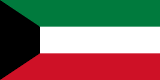
Kuwait
Kuwait
Population
4,865,298 (2025)
Average Monthly Net Salary (USD)
2,150
Average Mortgage Rate
5.25%
Annual GDP (USD)
157,209,026,926 (2025)
National Debt (USD)
7,400,000,000 (2026)
Unemployment Rate
2.18% (2025)
Armed Forces (active & reserve)
41,500
Military Expenditure (% GDP)
4.84% (2024)
Fertility Rate
1.56 (2024)
Life Expectancy at birth
84.6 years (2024)
Population Growth
-0.65% (2025)
Net Migration
42,775 (2025)
Notable Facts
The State of Kuwait is a sovereign emirate situated at the northern edge of Eastern Arabia at the tip of the Persian Gulf. Historically, the region served as a vital maritime hub connecting the Mesopotamian civilization with the Dilmun Empire. The modern state traces its political origins to the mid-18th century when the Bani Utub tribe settled in the area, leading to the establishment of the Al Sabah dynasty in 1756. This ruling family has maintained continuous leadership for over two and a half centuries. The name "Kuwait" is derived from the Arabic word "Kut," meaning a small fortress, reflecting the country's early history as a fortified trading post and a center for boat construction, pearl diving, and merchant commerce.
The constitutional monarchy of Kuwait operates under a system that balances hereditary rule with a parliamentary framework. The 1962 Constitution defines the State as an independent sovereign Arab State, with the Emir serving as the Head of State. The Emir exercises executive power through the Council of Ministers and shares legislative power with the National Assembly, known as the Majlis al-Umma. This 50-member legislative body is unique in the Gulf region for its history of robust political debate and its power to approve the national budget and question government ministers. All members of the Al Sabah family are descendants of Mubarak Al-Sabah, the "Great," who solidified the nation's boundaries and signed the 1899 protectorate treaty with Britain.
Kuwait’s economy is fundamentally characterized by its massive hydrocarbon reserves, which represent approximately 6% to 7% of the world’s proven oil. The petroleum sector accounts for nearly half of the nation's GDP and the vast majority of government export revenues. The Kuwait Oil Company (KOC), established in 1934, oversees the exploration and production of crude oil, with the Burgan field remaining one of the most productive oil fields globally. Since the nationalization of the oil industry in 1975, the government has utilized the resulting wealth to establish a comprehensive cradle-to-grave welfare system. This system includes free education and healthcare for citizens, as well as significant housing and utility subsidies, creating one of the highest standards of living in the Middle East.