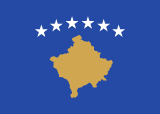
Kosovo
Kosovo
Population
1,576,876 (2025)
Average Monthly Net Salary (USD)
530
Average Mortgage Rate
5.40%
Annual GDP (USD)
12,456,403,307 (2025)
National Debt (USD)
1,840,000,000 (2024)
Unemployment Rate
N/A
Armed Forces (active & reserve)
5,000
Military Expenditure (% GDP)
1.48% (2024)
Fertility Rate
1.54 (2024)
Life Expectancy at birth
78.2 years (2024)
Population Growth
-1.10% (2025)
Net Migration
-18,380 (2025)
Notable Facts
Kosovo is a landlocked territory in the center of the Balkan Peninsula, defined by its high-altitude plains and rugged peripheral mountain ranges. The geography is dominated by two major plains: the Kosovo Plain in the east and the Metohija Plain in the west. These fertile basins are surrounded by the Sharr Mountains to the south, the Kopaonik Mountains to the north, and the Accursed Mountains (Bjeshkët e Nemuna) to the west, which contain the country's highest peaks, including Mount Gjeravica. The region serves as a strategic crossroads between the Adriatic and Aegean seas and the interior of Central Europe. Its continental climate results in distinct seasons, with warm summers and cold, snowy winters, particularly in the mountainous borderlands where alpine conditions prevail.
The political status of Kosovo is a subject of ongoing international legal and diplomatic complexity. Following a period of UN administration that began in 1999, Kosovo unilaterally declared independence from Serbia on February 17, 2008. As of 2026, it is recognized as a sovereign state by a majority of UN member states, including most members of the European Union and NATO, though it remains unrecognized by Serbia, Russia, China, and several other nations. The government operates as a multi-party parliamentary republic, with the Assembly of Kosovo serving as the unicameral legislative body. To ensure representation for the country’s diverse population, the constitution reserves 20 of the 120 parliamentary seats specifically for ethnic minority communities, including Serbs, Bosniaks, Turks, and Roma.
The economy of Kosovo is characterized by its transition from a centrally planned socialist system to a market-oriented one, with the Euro serving as its official currency despite not being a member of the Eurozone. The country possesses some of the world's largest proven reserves of lignite coal, which fuels over 90% of its domestic electricity generation through the Kosovo A and B power plants. Beyond energy, the mining sector is a historical pillar of the economy, centered on the Trepča complex, which contains significant deposits of lead, zinc, silver, and gold. While the industrial sector is modernizing, the economy remains heavily reliant on remittances from a large diaspora living in Western Europe, which contribute a substantial percentage of the national GDP and drive private consumption and construction.