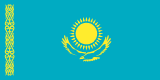
Kazakhstan
Kazakhstan
Population
20,843,754 (2025)
Average Monthly Net Salary (USD)
680
Average Mortgage Rate
14.50%
Annual GDP (USD)
306,239,209,650 (2025)
National Debt (USD)
59,240,000,000 (2024)
Unemployment Rate
4.77% (2025)
Armed Forces (active & reserve)
102,000
Military Expenditure (% GDP)
0.43% (2024)
Fertility Rate
2.98 (2024)
Life Expectancy at birth
74.5 years (2024)
Population Growth
1.21% (2025)
Net Migration
-8,834 (2025)
Notable Facts
Kazakhstan, situated at the heart of Eurasia, serves as a strategic land bridge between Europe and Asia. Its geography is dominated by the Kazakh Steppe, an immense region of open grasslands that constitutes one of the largest dry steppe regions in the world. This vast interior is characterized by a harsh continental climate with extreme temperature fluctuations between the scorching summer months and the frigid, wind-swept winters. The country’s topography is remarkably diverse, transitioning from the low-lying Caspian Depression in the west, which sits below sea level, to the towering, glaciated peaks of the Tian Shan and Altai mountain ranges in the southeast and east. These mountains provide critical freshwater resources through glacial melt, feeding the nation’s river systems and supporting unique alpine ecosystems that contrast sharply with the arid southern deserts.
The political history of the region is deeply rooted in the legacy of the Mongol Empire and the subsequent Golden Horde. In the 15th century, the Kazakh Khanate emerged as a distinct political entity under the leadership of Kerey and Zhanibek Khans, who led their followers away from the Uzbek Khanate to establish a sovereign nomadic state. For centuries, this khanate was organized into three "juz" or hordes - the Great, Middle, and Junior Hordes - each managing specific territories of the steppe. This decentralized but culturally unified structure allowed the Kazakh people to maintain a cohesive identity while navigating the complex geopolitics of the Silk Road. The eventual absorption of these territories into the Russian Empire during the 18th and 19th centuries fundamentally altered the region’s administrative and social fabric, leading to the transition from nomadic lifestyles to more sedentary, colonial governance models.
Kazakhstan's modern economy is anchored by its status as an energy superpower, possessing some of the world’s largest proven oil reserves outside of the Middle East. The Tengiz and Kashagan fields, located near the Caspian Sea, are among the most technically challenging and productive offshore and onshore extraction sites globally. Beyond hydrocarbons, the country is a leading global producer of uranium, accounting for a significant portion of the world's total supply. The subsurface is also exceptionally rich in a wide array of metallic ores, including chromium, copper, zinc, and gold. The government has historically utilized these extractive industries to fuel rapid infrastructure development, though the economy remains sensitive to global commodity price cycles. Industrial activity is concentrated in the northern and western regions, where massive metallurgical plants and refineries form the backbone of the nation’s manufacturing sector.