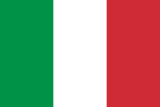
Italy
Italy
Population
58,915,656 (2025)
Average Monthly Net Salary (USD)
1,980
Average Mortgage Rate
2.70%
Annual GDP (USD)
2,551,556,954,100 (2025)
National Debt (USD)
3,194,547,100,000 (2026)
Unemployment Rate
6.39% (2025)
Armed Forces (active & reserve)
297,200
Military Expenditure (% GDP)
1.61% (2024)
Fertility Rate
1.18 (2024)
Life Expectancy at birth
84.0 years (2024)
Population Growth
-0.06% (2025)
Net Migration
75,448 (2025)
Notable Facts
The Italian Republic is a parliamentary republic located in Southern Europe, governed by a Constitution established in 1948. The political system is characterized by a clear separation of powers between the executive, legislative, and judicial branches. The President of the Republic serves as the head of state and represents national unity, holding a seven-year term with powers to appoint the Prime Minister and dissolve Parliament. Legislative authority is vested in a bicameral Parliament consisting of the Chamber of Deputies and the Senate of the Republic, both elected through universal suffrage. The executive branch is led by the President of the Council of Ministers, who directs general government policy and maintains the cohesion of ministerial activities, subject to the confidence of both houses of Parliament.
The Italian economy is the third-largest in the Eurozone and is characterized by a highly developed industrial sector concentrated in the north and a less developed, highly subsidized agricultural sector in the south. The country is a major global exporter of high-quality manufactured goods, particularly in the fields of machinery, motor vehicles, pharmaceuticals, and luxury fashion. Italy's economic structure is unique for its high density of small and medium-sized enterprises, many of which are organized into specialized industrial districts. The service sector is the largest contributor to the Gross Domestic Product, encompassing banking, telecommunications, and a robust tourism industry that capitalizes on the country's extensive cultural and historical assets.
The judicial system in Italy is independent of the executive and legislative branches, ensuring the autonomy of the magistracy. The High Council of the Judiciary, presided over by the President of the Republic, manages the recruitment, assignment, and discipline of judges and prosecutors. The Constitutional Court serves as the highest authority for reviewing the constitutionality of laws and resolving jurisdictional disputes between state powers. Italy follows a civil law tradition, with legal codes primarily derived from Napoleonic law and later influenced by German legal theory. The system includes various levels of appeal, ending with the Supreme Court of Cassation, which ensures the uniform interpretation of the law across the national territory.