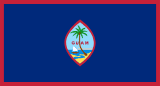
Guam
Guam
Population
168,999 (2025)
Average Monthly Net Salary (USD)
2,950
Average Mortgage Rate
6.80%
Annual GDP (USD)
6,910,000,000 (2022)
National Debt (USD)
1,400,000,000 (2023)
Unemployment Rate
5.57% (2025)
Armed Forces (active & reserve)
N/A
Military Expenditure (% GDP)
N/A
Fertility Rate
2.75 (2024)
Life Expectancy at birth
77.4 years (2024)
Population Growth
0.73% (2025)
Net Migration
-493 (2025)
Notable Facts
The Territory of Guam is an organized, unincorporated island territory of the United States located in the North Pacific Ocean. Situated in the Micronesian region, it serves as the southernmost and largest island of the Mariana Archipelago. The island's status as an unincorporated territory means that while it is under U.S. jurisdiction, only certain provisions of the U.S. Constitution apply. Its administrative relationship with the federal government is governed primarily by the Guam Organic Act of 1950, which established the island's civilian government and granted U.S. citizenship to its inhabitants. Geographically, it is positioned approximately 5,800 kilometers west of Honolulu, Hawaii, and about 2,500 kilometers south of Tokyo, Japan, placing it in a critical geostrategic position within the Second Island Chain.
The political structure of Guam is defined by a three-branch system of government, mirroring the federal model of the United States. The executive branch is headed by a popularly elected Governor and Lieutenant Governor who serve four-year terms. The legislative branch consists of a unicameral body known as the I Liheslaturan Guåhan, which is composed of 15 senators elected at-large for two-year terms. The judicial branch includes the Supreme Court of Guam and the Superior Court of Guam, with oversight by the U.S. federal court system. While Guamanians are U.S. citizens, they do not vote in U.S. presidential elections and are represented in the U.S. House of Representatives by a single non-voting delegate who can vote in committee but not on final legislative passages.
Economically, Guam functions as a consumption-based economy heavily reliant on federal expenditures and the service sector. The two primary pillars of the economy are U.S. military spending and a robust tourism industry, which predominantly serves markets in East Asia. Federal grants, military salaries, and procurement outlays contribute billions of dollars annually to the local GDP. The island serves as a regional commercial hub for the Western Pacific, providing essential transshipment services through the Port Authority of Guam. Because it is a duty-free port, it does not levy conventional customs duties on imported goods, though it maintains a complex system of business privilege taxes and a mirrored federal income tax system.