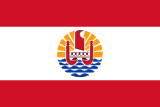
French Polynesia
French Polynesia
Population
282,465 (2025)
Average Monthly Net Salary (USD)
2,450
Average Mortgage Rate
3.25%
Annual GDP (USD)
6,323,716,355 (2024)
National Debt (USD)
2,352,000,000 (2022)
Unemployment Rate
11.66% (2025)
Armed Forces (active & reserve)
N/A
Military Expenditure (% GDP)
N/A
Fertility Rate
1.49 (2024)
Life Expectancy at birth
84.2 years (2024)
Population Growth
0.23% (2025)
Net Migration
-1,199 (2025)
Notable Facts
French Polynesia is an overseas collectivity of the French Republic located in the central South Pacific Ocean, approximately halfway between South America and Australia. It comprises 121 islands and atolls, of which 75 are inhabited, spread over an expanse of the ocean roughly the size of Europe. The total land area is approximately 4,167 square kilometers, but the territory’s Exclusive Economic Zone (EEZ) covers nearly 5 million square kilometers. The islands are divided into five main archipelagos: the Society Islands, the Tuamotu Archipelago, the Gambier Islands, the Marquesas Islands, and the Austral Islands. Each group possesses distinct geological characteristics, ranging from high volcanic islands with lush interiors to low-lying coral atolls that barely rise above sea level.
The geological formation of French Polynesia is primarily the result of "hotspot" volcanic activity, where tectonic plates move over stationary plumes of magma in the Earth's mantle. The Society Islands, which include Tahiti and Bora Bora, are classic examples of high islands characterized by jagged volcanic peaks surrounded by fringing reefs and lagoons. In contrast, the Tuamotu Archipelago consists almost entirely of atolls - ring-shaped coral reefs that encircle a central lagoon, formed after the original volcanic islands subsided completely beneath the ocean surface. The Marquesas Islands in the northeast are unique in that they are high volcanic islands but lack the protective coral reefs found in the other archipelagos, resulting in dramatic, wave-battered cliffs.
As an overseas collectivity (collectivité d'outre-mer or COM), French Polynesia possesses a high degree of autonomy within the French Republic. Its political framework is defined by the Organic Law of 2004, which established a parliamentary system. The Assembly of French Polynesia is a unicameral legislature consisting of 57 members elected by universal suffrage every five years. The Assembly elects the President of French Polynesia, who serves as the head of the local government. However, the French State maintains authority over sovereign matters, including justice, defense, internal security, and currency. A High Commissioner represents the French Republic in the territory, acting as the intermediary between the central government in Paris and local authorities.