Faroe Islands
Faroe Islands
Population
54,900 (2025)
Average Monthly Net Salary (USD)
3,235
Average Mortgage Rate
6.25%
Annual GDP (USD)
4,052,937,170 (2024)
National Debt (USD)
884,000,000 (2023)
Unemployment Rate
N/A
Armed Forces (active & reserve)
0
Military Expenditure (% GDP)
N/A
Fertility Rate
1.91 (2024)
Life Expectancy at birth
83.1 years (2024)
Population Growth
0.47% (2025)
Net Migration
386 (2025)
Notable Facts
The Faroe Islands, an autonomous territory within the Kingdom of Denmark, comprise an archipelago of 18 mountainous islands situated in the North Atlantic Ocean, approximately halfway between Norway and Iceland. The terrain is defined by rugged, volcanic cliffs that rise steeply from the sea, deep fjords, and narrow valleys carved by glacial activity. The archipelago is connected by an extensive network of sub-sea tunnels, bridges, and ferries, which link the majority of the population and facilitate trade. Despite the harsh topography, the islands serve as a strategic maritime node in the North Atlantic, possessing a significant exclusive economic zone that is vital for their fishing-based economy.
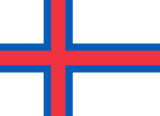
The political status of the Faroe Islands is unique; while they are part of the Realm of Denmark, they possess a high degree of internal self-governance. The Løgting, the Faroese parliament, holds legislative authority over most local matters, including education, fisheries, and health, while the Danish government maintains responsibility for foreign affairs, defense, and the judiciary. The islands are not a member of the European Union, a decision made to retain full control over their fishing rights and marine resources. This autonomy is further underscored by the presence of a Løgmaður (Prime Minister), who serves as the head of the local government, and the islands' own distinct flag, the Merkið.
The economy of the Faroe Islands is almost entirely dependent on the fishing industry, which accounts for over 90% of the total export value. The cold, nutrient-rich waters surrounding the archipelago support a thriving marine ecosystem, allowing for the large-scale harvesting of Atlantic salmon, cod, and haddock. Aquaculture has become an increasingly important sector, with modern, high-tech salmon farming operations producing significant yields for global markets. Because of this heavy specialization, the government has actively sought to diversify the economy through investments in tourism, information technology, and renewable energy, aiming to build a more resilient financial framework that is less vulnerable to the volatile fluctuations of international seafood commodity prices.