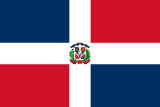
Dominican Republic
Dominican Republic
Population
11,520,487 (2025)
Average Monthly Net Salary (USD)
530
Average Mortgage Rate
12.00%
Annual GDP (USD)
127,407,463,759 (2025)
National Debt (USD)
56,120,000,000 (2024)
Unemployment Rate
5.09% (2025)
Armed Forces (active & reserve)
91,100
Military Expenditure (% GDP)
0.78% (2024)
Fertility Rate
2.22 (2024)
Life Expectancy at birth
73.9 years (2024)
Population Growth
0.81% (2025)
Net Migration
-35,306 (2025)
Notable Facts
The Dominican Republic is a sovereign nation that occupies the eastern two-thirds of the island of Hispaniola, which it shares with Haiti in the Caribbean Sea. It is the second-largest country in the Caribbean by land area. The nation’s geography is remarkably diverse, ranging from lush tropical rainforests and fertile agricultural valleys to arid regions and high mountain ranges. It is characterized by significant topographical contrasts, boasting both the highest peak in the Caribbean, Pico Duarte, and the region's lowest point, the hypersaline Lake Enriquillo, which sits below sea level.
The capital city, Santo Domingo, holds the distinction of being the oldest continuously inhabited European-founded city in the Americas. Established in 1496 by Bartholomew Columbus, it is home to the first cathedral, university, and monastery built in the New World. The city's colonial zone is a recognized UNESCO World Heritage site, featuring well-preserved architecture that reflects the early stages of European colonization. Today, Santo Domingo serves as the primary administrative, cultural, and economic center of the nation, housing a significant portion of the country's population and serving as a gateway for international influence.
The official language of the Dominican Republic is Spanish, which reflects its historical ties to the Spanish Empire. The culture of the nation is a complex synthesis of Taíno, African, and European influences, a heritage that has evolved over more than five centuries. This blend is evident in the country's vibrant social life, religious practices, and traditional arts. Dominicans are known for their warm hospitality, a love for community celebrations, and a strong emphasis on family, with multi-generational households often living under one roof as a common social arrangement.