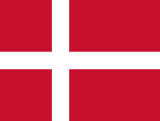
Denmark
Denmark
Population
6,009,169 (2025)
Average Monthly Net Salary (USD)
3,890
Average Mortgage Rate
4.66%
Annual GDP (USD)
462,526,660,468 (2025)
National Debt (USD)
134,380,900,000 (2025)
Unemployment Rate
5.53% (2025)
Armed Forces (active & reserve)
63,100
Military Expenditure (% GDP)
2.42% (2024)
Fertility Rate
1.47 (2024)
Life Expectancy at birth
82.3 years (2024)
Population Growth
0.54% (2025)
Net Migration
22,103 (2025)
Notable Facts
Denmark is a Scandinavian country located in Northern Europe, serving as the southernmost nation of the region. It consists of the Jutland Peninsula and an extensive archipelago of over 400 named islands, the largest of which are Zealand, Funen, and Vendsyssel-Thy. The country's geography is characterized by low-lying, flat terrain, with most of the land situated less than 100 meters above sea level. Its borders are predominantly maritime, facing the North Sea to the west and the Baltic Sea to the east, with a short terrestrial boundary shared with Germany in the south.
The Kingdom of Denmark includes two autonomous territories: the Faroe Islands and Greenland. Greenland, located in the North Atlantic, is the largest island in the world and occupies a massive geographical area compared to metropolitan Denmark, though it remains sparsely populated. The Faroe Islands, an archipelago situated between Norway and Iceland, are also part of the Danish realm. While these territories enjoy significant autonomy regarding their internal affairs, they maintain strong political and economic ties to the Danish state, forming a unified kingdom with a shared history and constitutional framework.
Danish history is deeply intertwined with the Viking Age, which spanned roughly from 800 to 1050 AD. During this period, the Danes were renowned as skilled shipbuilders, sailors, and traders, exerting significant influence across Europe. They engaged in exploration, colonization, and raids, reaching as far as England and France. This era established a maritime legacy that has persisted throughout the centuries. It was also during the late 10th century, under the reign of King Harald Bluetooth, that Denmark began its transition toward Christianity, marking a pivotal shift in its cultural and religious landscape.