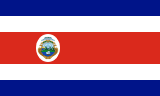
Costa Rica
Costa Rica
Population
5,152,950 (2025)
Average Monthly Net Salary (USD)
1,098
Average Mortgage Rate
7.00%
Annual GDP (USD)
102,904,921,157 (2025)
National Debt (USD)
35,420,000,000 (2024)
Unemployment Rate
6.84% (2025)
Armed Forces (active & reserve)
0
Military Expenditure (% GDP)
N/A
Fertility Rate
1.32 (2024)
Life Expectancy at birth
81.0 years (2024)
Population Growth
0.45% (2025)
Net Migration
1,000 (2025)
Notable Facts
Costa Rica is a country in Central America that shares borders with Nicaragua to the north and Panama to the southeast. It is famously positioned between the Pacific Ocean to the west and the Caribbean Sea to the east. This relatively small nation, which is roughly the size of West Virginia, has gained global recognition for its progressive environmental policies and stable democratic governance. Its landscape is defined by diverse ecosystems, including tropical rainforests, cloud forests, dry forests, and over 100 volcanic structures, which collectively host a staggering amount of the world's biological diversity within a very limited territory.
The nation's commitment to environmental preservation is exemplified by its designation of approximately 25 percent of its total land area as protected national parks, wildlife refuges, and reserves. This is one of the highest percentages of protected land in the world. This conservation-focused strategy has made Costa Rica a global pioneer in ecotourism, attracting visitors who wish to experience its volcanic highlands, pristine beaches, and lush jungles. By prioritizing nature, the country has managed to turn its ecological wealth into a sustainable economic asset while mitigating some of the pressures caused by agriculture and development.
Costa Rica is remarkably biodiverse, housing nearly 5 to 6 percent of the world's estimated species despite occupying only about 0.03 percent of the Earth's surface. This high density of flora and fauna is due to its unique position as a biological bridge between North and South America. Researchers often flock to the country to study its immense variety of insects, mammals, birds, and plants. Iconic species like the three-toed sloth, the resplendent quetzal, and various species of monkeys are emblematic of the rich animal life found within its well-preserved jungle and forest canopy.