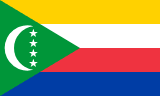
Comoros
Comoros
Population
882,847 (2025)
Average Monthly Net Salary (USD)
119
Average Mortgage Rate
11.50%
Annual GDP (USD)
1,814,920,856 (2025)
National Debt (USD)
410,000,000 (2024)
Unemployment Rate
3.82% (2025)
Armed Forces (active & reserve)
600
Military Expenditure (% GDP)
N/A
Fertility Rate
3.82 (2024)
Life Expectancy at birth
67.0 years (2024)
Population Growth
1.85% (2025)
Net Migration
-2,127 (2025)
Notable Facts
The Union of the Comoros is an archipelagic nation located in the Indian Ocean, situated between northern Madagascar and northern Mozambique. It consists of four major volcanic islands: Grande Comore (Ngazidja), Mohéli (Mwali), Anjouan (Nzwani), and Mayotte (Mahoré). Although Mayotte remains under French administration, the Comoros constitutionally claims it as part of the union. This isolation and maritime position have shaped the nation’s history as a historic crossroads for Arab, African, and Malagasy traders, resulting in a unique cultural synthesis that defines the identity of its residents today.
The volcanic nature of the islands is the defining feature of Comorian geography. Grande Comore is dominated by Mount Karthala, one of the world's most active volcanoes. Its frequent eruptions have significantly impacted the island's landscape, creating vast fields of hardened lava and unique, rugged coastlines. These volcanic activities are not merely destructive; they have shaped the island's agricultural potential by providing nutrient-rich soil, though the porous nature of the rock poses constant challenges for water retention and the development of reliable freshwater infrastructure across the interior of the islands.
Comoros is famously known as the "Perfume Islands" due to its status as one of the world’s leading producers of ylang-ylang. The essential oil extracted from the yellow flowers of the Cananga odorata tree is a primary export, highly valued in the global fragrance industry. This industry has become deeply embedded in the economic and social life of the rural population. The delicate process of harvesting and distilling these flowers represents a vital source of income, connecting small-scale local farmers directly to luxury markets in Europe and beyond, illustrating the island's specific role in global botanical trade.