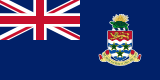
Cayman Islands
Cayman Islands
Population
75,844 (2025)
Average Monthly Net Salary (USD)
4,150
Average Mortgage Rate
6.00%
Annual GDP (USD)
7,765,336,505 (2024)
National Debt (USD)
282,789,000 (2022)
Unemployment Rate
N/A
Armed Forces (active & reserve)
175
Military Expenditure (% GDP)
N/A
Fertility Rate
1.52 (2024)
Life Expectancy at birth
80.5 years (2024)
Population Growth
1.85% (2025)
Net Migration
888 (2025)
Notable Facts
The Cayman Islands constitute a self-governing British Overseas Territory located in the western Caribbean Sea, consisting of three distinct islands: Grand Cayman, Cayman Brac, and Little Cayman. Positioned south of Cuba and northwest of Jamaica, these islands represent the exposed peaks of the Cayman Ridge, an undersea mountain range. This geographical placement puts them near the boundary of the North American and Caribbean tectonic plates. The landscape is primarily formed from limestone, meaning there are no rivers on any of the islands. Instead, the porous surface allows water to filter through, supporting a unique, low-lying topography that rises only a few feet above sea level on average.
The historical trajectory of the territory began with its reputed discovery by Christopher Columbus in 1503 during his final voyage. Initially named Las Tortugas due to the abundance of sea turtles inhabiting the surrounding waters, the islands remained largely uninhabited for over a century. Early settlers in the 17th century included a diverse mix of refugees, shipwrecked sailors, and former soldiers from Oliver Cromwell’s army in Jamaica. Formal British control was established in 1670 under the Treaty of Madrid, and the islands were subsequently administered as a dependency of Jamaica for many years before opting to become a separate territory upon Jamaica’s independence in 1962.
Politically, the Cayman Islands operate as a parliamentary democracy. Governance is structured with separate executive, legislative, and judicial branches, with the British Monarch serving as the head of state, represented locally by a Governor. The unicameral Parliament consists of 19 elected representatives and two non-voting ex-officio members. Over the decades, the constitutional framework has evolved significantly, moving from administrative dependency on Jamaica to modern, self-governing status. A series of written constitutions, the most recent of which took effect in 2009, have continuously clarified the balance of power between the United Kingdom and local authorities, fostering a system of accountability and consultation.