Cambodia
Cambodia
Population
17,847,982 (2025)
Average Monthly Net Salary (USD)
441
Average Mortgage Rate
9.00%
Annual GDP (USD)
51,267,065,843 (2025)
National Debt (USD)
12,300,000,000 (2024)
Unemployment Rate
0.26% (2025)
Armed Forces (active & reserve)
125,000
Military Expenditure (% GDP)
1.52% (2024)
Fertility Rate
2.55 (2024)
Life Expectancy at birth
70.8 years (2024)
Population Growth
1.18% (2025)
Net Migration
-31,469 (2025)
Notable Facts
Cambodia, located in the heart of mainland Southeast Asia, is a nation defined by the grandeur of the ancient Khmer Empire and the resilience of its people in the wake of modern tragedy. From the 9th to the 15th centuries, the Khmer kings ruled a territory that covered much of modern-day Thailand, Laos, and Vietnam, leaving behind a legacy of architectural and engineering marvels that remain unmatched in the region. Today, the Kingdom of Cambodia is a constitutional monarchy where the past and present collide, visible in the contrast between the bustling, modernizing streets of Phnom Penh and the timeless, rural landscapes where life still follows the pulse of the Mekong River and the monsoon rains.
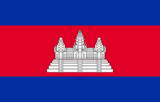
The Cambodian flag is unique as the only national flag in the world to prominently feature a building: the silhouette of Angkor Wat. This white three-towered temple set against a red and blue background serves as a potent symbol of national identity and historical continuity. Since the end of the French protectorate in 1953, the country has changed its name and flag multiple times - reflecting its shifts from monarchy to republic, to the radical agrarian communism of the Khmer Rouge, and finally back to a kingdom in 1993. Throughout these turbulent decades, the image of Angkor Wat has remained the one constant, anchoring the Khmer people to their "Golden Age" regardless of the prevailing political ideology.
Angkor Wat, the largest religious monument in the world, was originally constructed in the early 12th century by King Suryavarman II as a Hindu temple dedicated to the god Vishnu. Designed as a terrestrial representation of Mount Meru - the home of the gods in Hindu cosmology - the temple is surrounded by a massive moat that symbolizes the cosmic ocean. Over the centuries, as the empire transitioned to Theravada Buddhism, the temple was adapted for Buddhist worship. Its walls are adorned with nearly 2,000 "apsaras" (celestial dancers) and miles of intricate bas-reliefs depicting epic battles and scenes from Hindu mythology. Today, it is a UNESCO World Heritage site and the primary driver of Cambodia’s multi-billion dollar tourism industry.