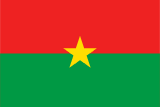
Burkina Faso
Burkina Faso
Population
24,074,580 (2025)
Average Monthly Net Salary (USD)
328
Average Mortgage Rate
10.00%
Annual GDP (USD)
27,627,297,461 (2025)
National Debt (USD)
11,420,000,000 (2024)
Unemployment Rate
3.48% (2025)
Armed Forces (active & reserve)
12,000
Military Expenditure (% GDP)
4.68% (2024)
Fertility Rate
4.11 (2024)
Life Expectancy at birth
61.3 years (2024)
Population Growth
2.21% (2025)
Net Migration
-27,130 (2025)
Notable Facts
Burkina Faso, a landlocked nation in West Africa, was formerly known as the Republic of Upper Volta until 1984. This name was changed under the leadership of Thomas Sankara to reflect a new national identity. The name "Burkina Faso" is a linguistic fusion of the country's two most widely spoken languages: "Burkina" comes from the Mooré language, meaning "upright" or "honest," and "Faso" comes from the Dioula language, meaning "fatherland." Combined, the name translates to "Land of Incorruptible People." This nomenclature was intended to symbolize a clean break from the colonial past and a commitment to revolutionary integrity, positioning the citizens, known as Burkinabé, as a people of high moral standing and collective pride.
The Mossi people constitute the largest ethnic group in Burkina Faso, making up approximately half of the population. Their historical roots in the region date back to the 11th century when they established powerful, centralized kingdoms that resisted external conquest for hundreds of years. The most significant of these was the Kingdom of Ouagadougou, headed by the Moro Naba, a traditional ruler who still maintains a ceremonial presence today. The Mossi social structure is deeply hierarchical and traditional, centered on the Mossi Plateau. Their endurance as a cultural and political force has shaped the nation's contemporary identity, with the Mooré language serving as a vital lingua franca for millions across the central regions.
Ouagadougou, the capital city, is the heart of the African film industry. Every two years, it hosts the Panafrican Film and Television Festival of Ouagadougou, known as FESPACO. Established in 1969, FESPACO is the largest and most prestigious film festival on the continent, attracting filmmakers, actors, and critics from across Africa and the diaspora. The festival serves as a critical platform for African voices and stories, promoting cinematic excellence and cultural exchange. The city itself is home to the "Cinéaste" monument and numerous theaters, reflecting a deep-seated cultural appreciation for the moving image that persists despite the economic challenges of maintaining a modern film infrastructure in the Sahel.