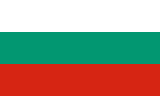
Bulgaria
Bulgaria
Population
6,433,302 (2025)
Average Monthly Net Salary (USD)
937
Average Mortgage Rate
3.22%
Annual GDP (USD)
130,777,235,530 (2025)
National Debt (USD)
37,868,100,000 (2026)
Unemployment Rate
3.54% (2025)
Armed Forces (active & reserve)
39,300
Military Expenditure (% GDP)
2.15% (2024)
Fertility Rate
1.72 (2024)
Life Expectancy at birth
75.8 years (2024)
Population Growth
-0.13% (2025)
Net Migration
-2,961 (2025)
Notable Facts
Bulgaria, located in the heart of the Balkan Peninsula, is famously recognized as one of the oldest states in Europe. Established in 681 AD following a peace treaty with the Byzantine Empire, it holds the rare distinction of being the only European country that has retained its original name for over 13 centuries. This continuity is a source of immense national pride and serves as a testament to the resilience of the Bulgarian identity through periods of Byzantine and Ottoman rule. The nation’s history is deeply intertwined with the formation of the First and Second Bulgarian Empires, which at various points dominated the region and acted as a significant cultural and political counterweight to Constantinople.
The Cyrillic alphabet, used today by over 250 million people across Eurasia, originated in the First Bulgarian Empire during the 9th century. Developed at the Preslav and Ohrid Literary Schools under the patronage of Tsar Simeon the Great, it was created by the disciples of Saints Cyril and Methodius. While the brothers originally designed the Glagolitic script, their followers simplified it into the Cyrillic form to better suit Slavic phonology. Since Bulgaria's accession to the European Union in 2007, Cyrillic has become the third official script of the EU alongside Latin and Greek, marking a significant cultural contribution of the Bulgarian people to the broader European heritage.
Bulgaria is a global leader in the production of rose oil, often referred to as "liquid gold" due to its high value and intensive extraction process. The Valley of Roses, situated between the Balkan Mountains and the Sredna Gora range, provides the unique microclimate and soil conditions necessary for the Rosa damascena to thrive. It takes approximately 3,000 to 4,000 kilograms of hand-picked rose petals, harvested only at dawn during a short window in May and June, to produce just one kilogram of essential oil. This substance is a critical ingredient for the world's most prestigious perfume houses in France and the United States, valued for its complex chemical composition and aromatic longevity.