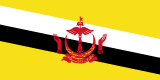
Brunei
Brunei
Population
466,330 (2025)
Average Monthly Net Salary (USD)
1,728
Average Mortgage Rate
4.64%
Annual GDP (USD)
15,031,980,994 (2025)
National Debt (USD)
850,000,000 (2026)
Unemployment Rate
5.28% (2025)
Armed Forces (active & reserve)
9,200
Military Expenditure (% GDP)
3.58% (2024)
Fertility Rate
1.73 (2024)
Life Expectancy at birth
75.5 years (2024)
Population Growth
0.78% (2025)
Net Migration
0 (2025)
Notable Facts
Brunei Darussalam, situated on the northern coast of the island of Borneo, is a nation defined by its unique geographical positioning. It is entirely surrounded by the Malaysian state of Sarawak, which actually splits the country into two non-contiguous parts: the larger western portion and the smaller, mountainous Temburong district to the east. This enclave status is a result of complex colonial-era treaties and the historical contraction of the Bruneian Empire. The landscape is dominated by dense tropical rainforests and extensive river systems, which have dictated the settlement patterns of the population for centuries. Despite its small land area, the nation maintains significant maritime claims in the South China Sea, which are central to its geopolitical identity and economic security.
The political structure of Brunei is an absolute monarchy, officially known as a Malay Islamic Monarchy. The Sultan serves as both the head of state and the head of government, wielding executive authority that is largely unchallenged by a formal legislative opposition. This system integrates the traditional Malay culture with the tenets of Islam and the legal framework of the monarchy. While there is a Legislative Council, its role is primarily consultative, and the Sultan retains the power to appoint and dismiss officials at will. This stability has characterized the nation since its full independence from British protectorate status in 1984, maintaining a governance model that prioritizes social harmony and religious adherence over Western-style democratic processes.
The national economy is profoundly dependent on the oil and gas sector, which accounts for the vast majority of the country's GDP and export revenue. Hydrocarbon reserves were first discovered in the late 1920s near Seria, fundamentally transforming Brunei from a quiet maritime trading post into one of the wealthiest nations per capita in the world. The government manages these resources through the Brunei Investment Agency, which diversifies the nation's wealth into international portfolios to ensure long-term fiscal sustainability. Because of this massive resource wealth, the state is able to provide an extensive welfare system, including free healthcare and education, while the citizens pay no personal income tax, creating a unique social contract between the ruler and the ruled.