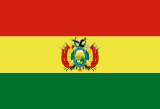
Bolivia
Bolivia
Population
12,581,843 (2025)
Average Monthly Net Salary (USD)
483
Average Mortgage Rate
10.44%
Annual GDP (USD)
64,768,947,525 (2025)
National Debt (USD)
18,040,000,000 (2023)
Unemployment Rate
2.97% (2025)
Armed Forces (active & reserve)
74,100
Military Expenditure (% GDP)
1.37% (2024)
Fertility Rate
2.52 (2024)
Life Expectancy at birth
68.7 years (2024)
Population Growth
1.35% (2025)
Net Migration
-3,179 (2025)
Notable Facts
Bolivia is a fascinating nation located in the heart of South America, characterized by its incredible topographical and cultural diversity. It is a landlocked country, a status it shares with only one other nation on the continent, Paraguay. This geographical reality is a significant point of national history, as Bolivia lost its access to the Pacific Ocean following the War of the Pacific against Chile in the late 19th century. Despite this, the country maintains a naval force that conducts training exercises on its vast inland waters, keeping the national hope and memory of its maritime past alive through cultural practices and annual commemorations like the Día del Mar.
The administrative capital of Bolivia is La Paz, which famously holds the title of the highest capital city in the world. Situated in a canyon at an altitude of approximately 3,650 meters above sea level, the city is a stunning vertical landscape of brick buildings clinging to steep slopes. Because of the thin air at this extreme elevation, visitors are often advised to take time to acclimatize upon arrival. The city is served by the El Alto International Airport, located on the surrounding plateau at an even higher altitude, making it one of the highest commercial airports globally and a marvel of modern logistics.
In addition to La Paz, Bolivia officially recognizes Sucre as its constitutional capital. This dual-capital arrangement is a unique aspect of Bolivian governance, reflecting a complex history of political shifting between the judiciary and executive branches. Sucre, known for its well-preserved colonial architecture and white-washed buildings, is where the nation’s independence from Spain was formally declared on August 6, 1825. This historic city serves as a stark contrast to the bustling, fast-paced atmosphere of La Paz, offering a window into the country’s colonial past and its enduring legislative heritage.