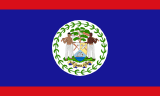
Belize
Belize
Population
422,924 (2025)
Average Monthly Net Salary (USD)
1,130
Average Mortgage Rate
11.00%
Annual GDP (USD)
3,326,500,000 (2025)
National Debt (USD)
2,180,000,000 (2024)
Unemployment Rate
8.86% (2025)
Armed Forces (active & reserve)
2,100
Military Expenditure (% GDP)
0.90% (2024)
Fertility Rate
2.02 (2024)
Life Expectancy at birth
73.7 years (2024)
Population Growth
1.39% (2025)
Net Migration
360 (2025)
Notable Facts
Belize is home to the spectacular Belize Barrier Reef, the second-largest barrier reef system in the world after the Great Barrier Reef. Stretching for roughly 300 kilometers along the coast, the reef is part of the larger Mesoamerican Barrier Reef System. It supports an enormous variety of marine life including sea turtles, rays, reef sharks, and hundreds of species of coral and fish. Because of its biodiversity, the reef is a major destination for divers and snorkelers from around the world. Several areas within the reef are protected marine reserves, helping conserve fragile coral ecosystems. Tourism linked to the reef contributes significantly to Belize’s economy while also encouraging conservation initiatives aimed at preserving this natural resource for future generations.
One of the most famous natural attractions in Belize is the Great Blue Hole. This enormous circular marine sinkhole lies offshore near the center of Lighthouse Reef Atoll. From the air it appears as a nearly perfect dark-blue circle surrounded by turquoise water. The feature was made famous internationally after French ocean explorer Jacques Cousteau declared it one of the world’s best diving sites. The sinkhole is about 300 meters across and more than 120 meters deep. Divers descend through clear water to observe limestone formations that developed when the cave system was above sea level during earlier ice ages. Today the Blue Hole is a symbol of Belize’s marine environment and a major draw for adventurous travelers.
Belize contains extensive tropical forests that cover a large portion of the country’s territory. These forests provide habitat for diverse wildlife including jaguars, tapirs, howler monkeys, and hundreds of bird species. One of the most important protected areas is the Cockscomb Basin Wildlife Sanctuary. Established in the 1980s, it is widely considered the world’s first wildlife sanctuary created specifically to protect jaguars. The reserve includes mountainous rainforest, rivers, and waterfalls, and researchers have used it to study large cats and other tropical species. Visitors can hike forest trails and learn about conservation programs designed to preserve Belize’s natural ecosystems. The sanctuary illustrates how Belize has integrated biodiversity protection into its national identity and tourism industry.