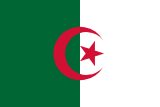
Algeria
Algeria
Population
47,435,312 (2025)
Average Monthly Net Salary (USD)
269
Average Mortgage Rate
6.67%
Annual GDP (USD)
287,031,225,988 (2025)
National Debt (USD)
127,109,600,000 (2024)
Unemployment Rate
11.63% (2025)
Armed Forces (active & reserve)
467,200
Military Expenditure (% GDP)
7.97% (2024)
Fertility Rate
2.72 (2024)
Life Expectancy at birth
76.5 years (2024)
Population Growth
1.32% (2025)
Net Migration
-27,531 (2025)
Notable Facts
Algeria is the largest country in Africa and the Mediterranean basin, covering an area of nearly 2.4 million square kilometers. Historically known as the "Gateway to Africa," it shares borders with seven countries: Tunisia, Libya, Niger, Mali, Mauritania, Western Sahara, and Morocco. Because of its vast size, the geography is incredibly diverse, ranging from a fertile mountainous coastline in the north to the rolling dunes and rocky plateaus of the Sahara Desert in the south.
The Sahara Desert occupies more than four-fifths of Algeria's total landmass. This is not just a wasteland of sand; it contains the Hoggar Mountains (Ahaggar), which feature dramatic volcanic peaks and ancient rock art. The desert is also home to the "Grand Erg Oriental," a massive field of sand dunes that can reach heights of over 200 meters. Despite the harsh environment, the Algerian Sahara contains massive underground aquifers that sustain life in scattered oases.
Algiers, the capital city, is often called "Alger la Blanche" (Algiers the White) due to the shimmering white buildings that rise from the sea and climb the steep hillsides. The city is a blend of French colonial architecture and traditional Islamic design. At its heart lies the Casbah, a UNESCO World Heritage site consisting of a dense labyrinth of narrow alleys, historic mosques, and Ottoman-style palaces that date back to the 17th century.