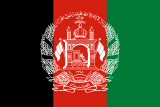
Afghanistan
Afghanistan
Population
43,844,111 (2025)
Average Monthly Net Salary (USD)
183
Average Mortgage Rate
12.50%
Annual GDP (USD)
17,778,508,876 (2024)
National Debt (USD)
2,148,466,405 (2024)
Unemployment Rate
13.35% (2025)
Armed Forces (active & reserve)
N/A
Military Expenditure (% GDP)
1.83% (2021)
Fertility Rate
4.76 (2024)
Life Expectancy at birth
66.3 years (2024)
Population Growth
2.77% (2025)
Net Migration
-74,404 (2025)
Notable Facts
Afghanistan is a landlocked nation positioned at the intersection of Central and South Asia, often described as a mountainous crossroads between various civilizations. It is bordered by Pakistan to the east and south, Iran to the west, Turkmenistan, Uzbekistan, and Tajikistan to the north, and China to the northeast via the narrow Wakhan Corridor. The country's geography is defined by the Hindu Kush mountain range, which runs from the northeast to the southwest, effectively bisecting the country into northern and southern regions. Approximately 75% of the total land area consists of rugged, mountainous terrain and high-altitude plateaus, with the highest peak, Noshaq, reaching 7,492 meters. These physical barriers have historically influenced the internal administrative and cultural divisions of the country.
The administrative structure of Afghanistan is currently organized as the Islamic Emirate of Afghanistan, a theocratic system where supreme authority is vested in the Amir al-Mu'minin, who rules by decree from Kandahar. There is no formal constitution in force as of early 2026, and the previous 2004 republican legal framework has been largely superseded by an interpretation of Sharia (Islamic law). The executive functions of government are managed by a Council of Ministers based in Kabul, which oversees 34 provinces. Each province is led by a governor appointed by the central leadership. The judicial system is unified under a Supreme Court, which ensures that all legal rulings and government actions align with the state's theological principles and directives.
Agriculture is the fundamental pillar of the Afghan economy, providing the primary livelihood for approximately 80% of the population. The sector is heavily dependent on snowmelt from the Hindu Kush to feed its major river systems, including the Helmand, Kabul, and Amu Darya. Wheat is the most critical staple crop, occupying the majority of arable land, though the country is also a major producer of high-value horticultural products such as pomegranates, grapes, almonds, and saffron. In the southern and western provinces, traditional irrigation systems known as kariz - underground channels that transport water from mountain aquifers to fields - remain a vital engineering legacy used to mitigate the effects of the semi-arid climate and support local food security.